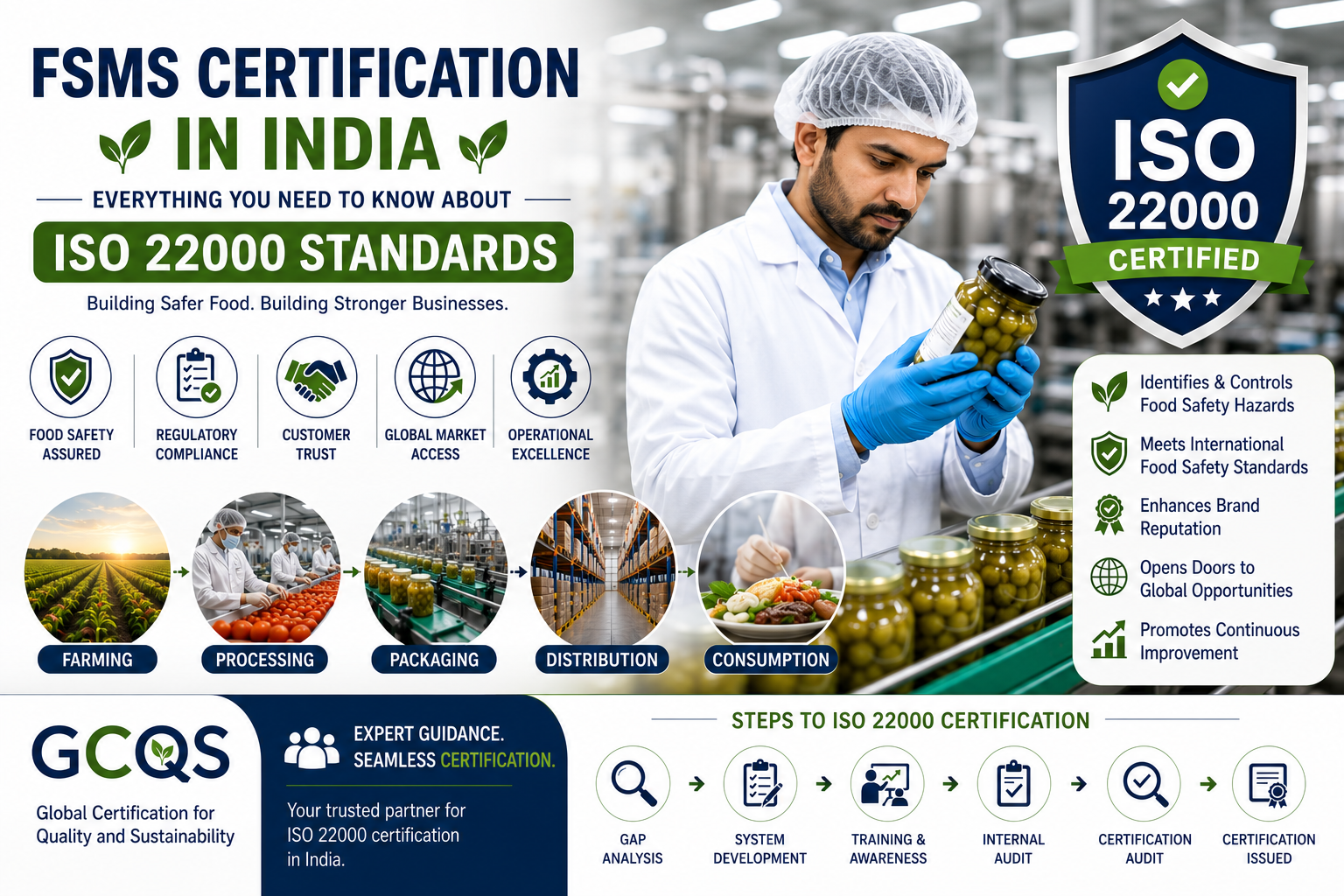
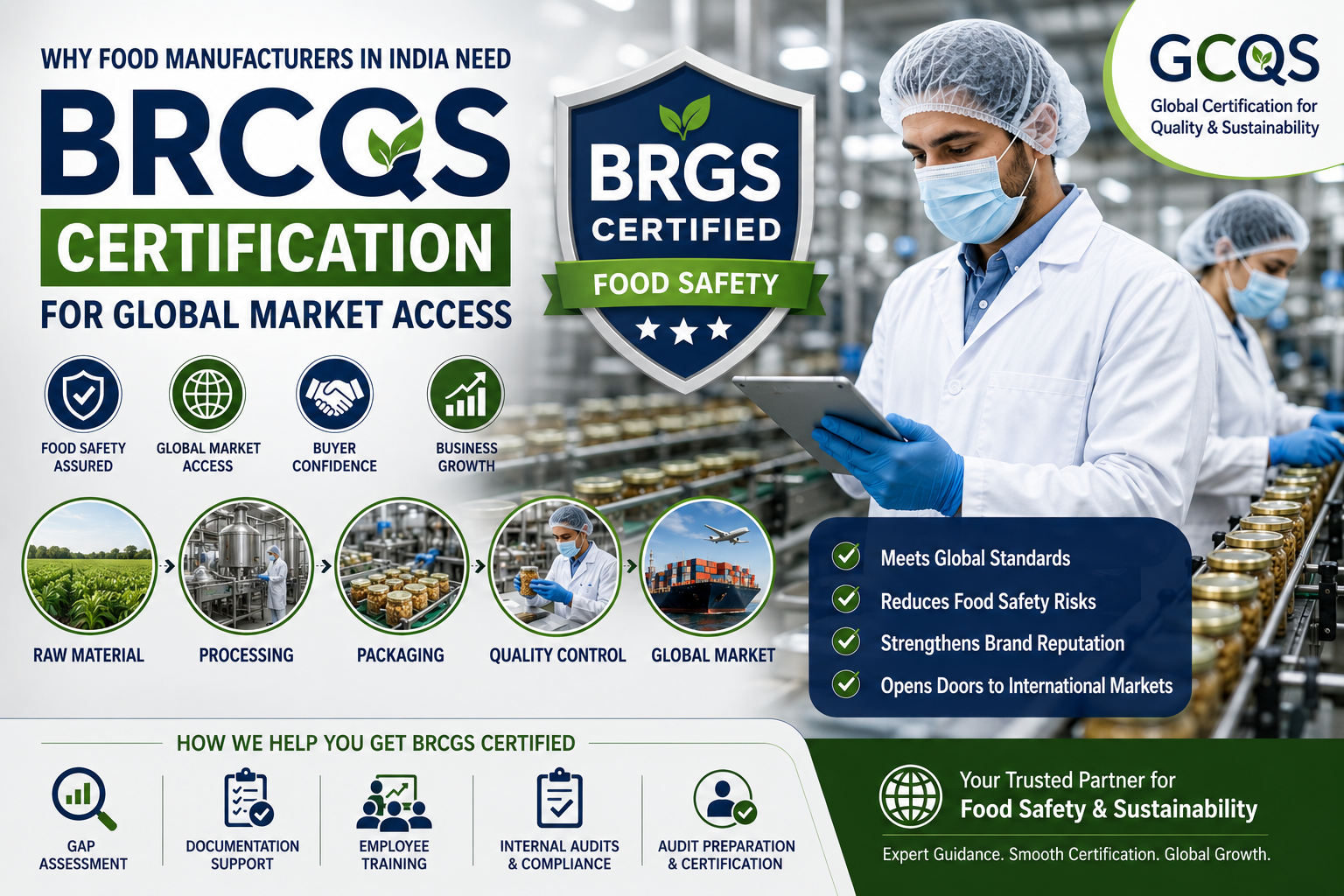
IFS Food Certification applies to food processing companies and businesses that pack loose food products. It covers all aspects of food manufacturing, including:
- Processing Activities: All stages of food processing, including preparation, processing, packaging, and handling.
- Product Types: Both food products and food ingredients.
- Facilities: The physical environment where food is processed, stored, and handled.
- Hygiene and Sanitation: Procedures to ensure cleanliness and prevent contamination.
Personnel Practices: Training and hygiene practices of staff involved in food production.
-
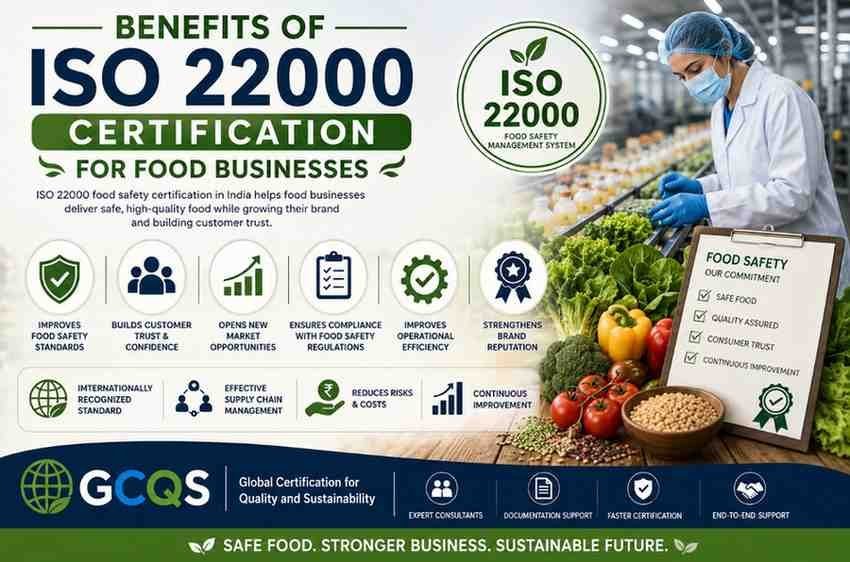
- Market Access: Facilitates entry into global markets by meeting international food safety standards.
- Consumer Trust: Builds confidence among consumers and business partners by demonstrating a commitment to food safety and quality.
- Regulatory Compliance: Helps meet legal requirements and industry regulations.
- Risk Management: Identifies and controls potential hazards in the food production process.
- Operational Efficiency: Improves processes and reduces waste and recalls.
- Competitive Advantage: Enhances brand reputation and provides a competitive edge in the marketplace.
Continuous Improvement: Encourages ongoing improvement in food safety and quality management systems.
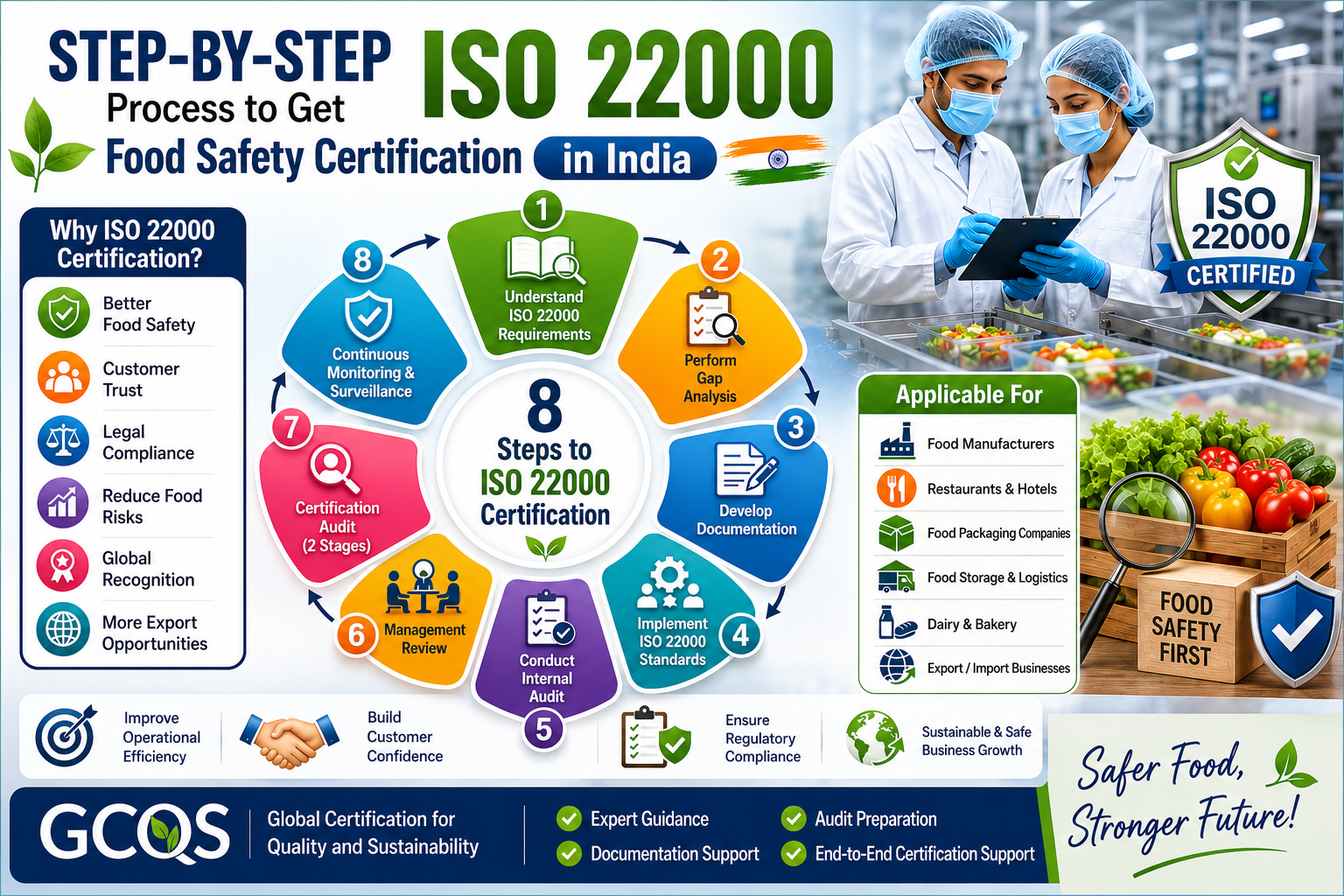
- Preparation: Understand the IFS Food Standard requirements and conduct a gap analysis to identify areas for improvement.
- Implementation: Develop and implement necessary procedures and documentation to meet the IFS Food Standard.
- Internal Audit: Conduct an internal audit to ensure all processes comply with the standard.
- Selection of Certification Body: Choose an accredited certification body to conduct the external audit.
- External Audit: Undergo a comprehensive audit by the selected certification body to verify compliance with the IFS Food Standard.
- Corrective Actions: Address any non-conformities identified during the audit and implement corrective actions.
- Certification: Receive IFS Food Certification upon successful completion of the audit and corrective actions.
- Surveillance Audits: Participate in regular surveillance audits to maintain certification and ensure ongoing compliance.