What is FSMS? Complete Guide for Food Businesses
Food Safety can be considered as one of the key responsibilities for any food business company. Regardless of the type of business, restaurant, food production company, food logistics firm, catering business or any other, food hygiene and food quality must be one of your main concerns. Here comes into play the importance of having a well-functioning Food Safety Management System.
FSMS enables organisations to properly address food safety hazards and risks, meeting legal requirements and standards concerning the issue. The increasing consumer awareness and legislative acts have made the consultation service provided by food safety management system consultants highly relevant to many food businesses.
In this comprehensive guide, we are going to speak about the Food Safety Management System and the advantages of using its services, especially the consulting services of GCQS.
1. What is FSMS?
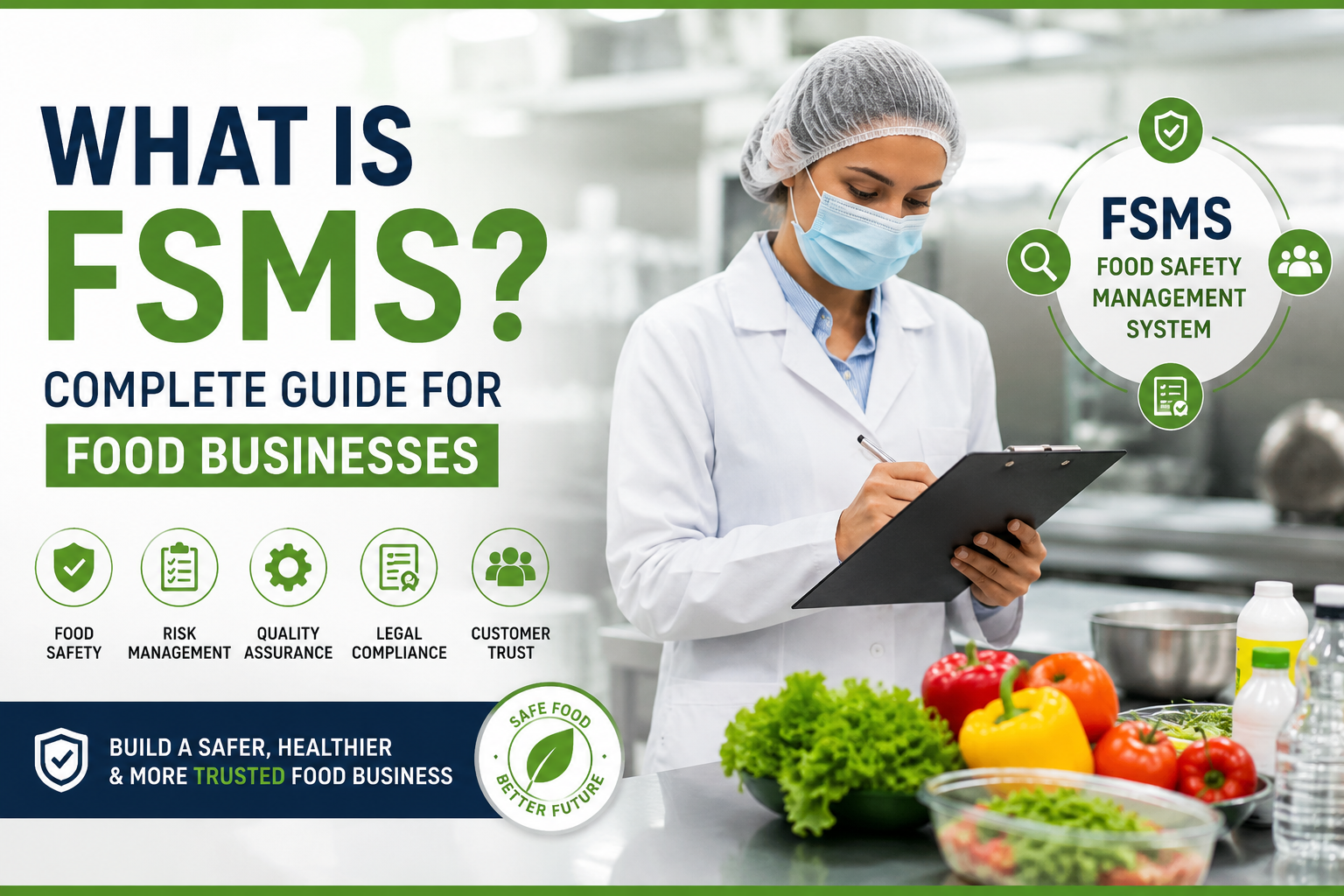
FSMS means Food Safety Management System. This refers to a structured mechanism whose purpose is to ensure the safety of food products through the entire food value chain.
The components that make up the Food Safety Management System include the policies, procedures, processes, and records that assist the business entities to achieve:
- Food safety hazards identification
- Contamination risks control
- Hygiene practices adherence
- Product quality assurance
- Regulatory compliance
- Improving customers’ confidence
The key objective of the FSMS is to prevent the occurrence of food-borne illnesses.
2. Why is a Food Safety Management System Important?
Food safety problems can negatively affect the reputation of an organisation, along with imposing fines and liabilities and resulting in product recalls. The implementation of the proper food safety management system will allow organisations to mitigate their risk and excel.
3. Benefits of FSMS
3.1. Better Food Safety
FSMS allows to detect all possible hazards that relate to biological, chemical, and physical contaminants beforehand.
3.2. Legal Compliance
Organisations dealing with food production are subject to certain food safety rules on local and international levels. Proper FSMS allows meeting all of the requirements.
3.3. Increased Customer Loyalty
Modern consumers prefer purchasing products from companies ensuring good levels of hygiene and food safety. It results in increasing customers’ loyalty towards them.
3.4. Increased Efficiency
With standard procedures in place, the work process in an organisation is optimised.
3.5. Lower Probability of Product Recall
Through the detection of critical control points, organisations are able to prevent the situation when unsafe products are sold.
4. Key Components of an FSMS
There are various components that a good Food Safety Management System entails.
4.1 Hazard Identification and Risk Assessment
Organisations need to recognise all the potential risks involved in maintaining food safety.
4.2 Good Manufacturing Practices (GMP)
GMP is the operational procedure of a company regarding cleanliness, sanitisation, hygiene, maintenance of equipment and proper storage.
4.3 HACCP Principles
The principle of HACCP entails Hazard Analysis and Critical Control Points, an internationally accepted method of controlling food safety hazards.
4.4 Documentation and Record Keeping
Correct record keeping facilitates documentation of procedures, inspections, correction actions and any other relevant compliance activity.
4.5 Training for Employees
Employees in organisations require periodic food safety training on hygiene and operational procedures.
5.5 Monitoring and Continuous Improvement
Food Safety Management System is an ongoing process that involves monitoring procedures and improvements in procedures.
6 Which Businesses Need FSMS?
It is important to have a Food Safety Management System for all organisations that operate in the food chain.
6.1 List of Industries that can Benefit from Food Safety Management Systems
- Food manufacturers
- Restaurants and coffee shops
- Catering industry
- Hotels
- Food packaging industry
- Cold storage warehouses
- Dairy/beverages industry
- Retail food stores
- Food production/agricultural sector
Regardless of the size of the company, ensuring food safety standards is vital for sustained success.
7. Role of FSMS Consultants
The adoption of an FSMS may often be quite complicated, particularly for those organisations that have little experience regarding the requirements for certification and food safety. Hence, FSMS consultants are usually sought.
8. What FSMS Consultants Can Offer
8.1 Gap Analysis
FSMS consultants analyze existing measures for food safety and pinpoint gaps in them.
8.2 System Development
FSMS consultants help design procedures for ensuring food safety within a company.
8.3 Employee Training
Professional FSMS consultants provide training to employees on matters of food safety.
8.4 Compliance Assistance
FSMS consultants help businesses become compliant with food safety certification standards (ISO 22000 and HACCP).
8.5 Audit Preparation
FSMS consultants get businesses ready for both internal and external audits required for food safety certification.
Collaborating with professional FSMS consultants will bring many benefits to your business.
9. Why Choose Global Certification for Quality and Sustainability (GCQS)?
“Global Certification for Quality and Sustainability (GCQS)” is the well-known name when businesses need professional help in terms of food safety certification.
GCQS can help companies to implement an efficient Food Safety Management System in accordance with the latest industry standards and best global practices.
9.1 Advantages of Choosing GCQS
- Professional FSMS consultants
- Customised food safety system
- Professional training & document management
- Help in achieving ISO and HACCP certification
- Audit preparation assistance
- Quality and sustainability focus
- The collaboration with “Global Certification for Quality and Sustainability (GCQS)” will assist the business in enhancing its food safety management system and gaining customers’ trust.
10. Steps to Implement a Food Safety Management System
Implementation of FSMS is characterised by various crucial processes.
10.1 Process 1: Assessment of Present Processes
Examine the existing food handling processes.
10.2 Process 2: Hazard Identification
Identify food safety hazards and critical control points.
10.3 Process 3: Documentation of Policies and Procedures
Establish appropriate policies and procedures.
10.4 Process 4: Employee Training
Train employees on various food safety measures.
10.5 Process 5: Internal Auditing
Internal auditing helps in identifying problems.
10.6 Process 6: Certification
Partner with FSMS experts for certification.
11. Conclusion
Food Safety Management System (FSMS) plays a vital role in every business in the food industry seeking safety, quality, and compliance. Not only does it ensure consumer safety, but it also enhances business efficiency and reputation.
With the assistance of experts in FSMS, your business will be able to effectively establish a food safety system that complies with international standards. By associating with GCQS, you will gain expert advice and compliance support, which will contribute to your sustainable business development.
Implementation of FSMS can definitely benefit your food business by establishing trust, reducing risks, and ensuring success.