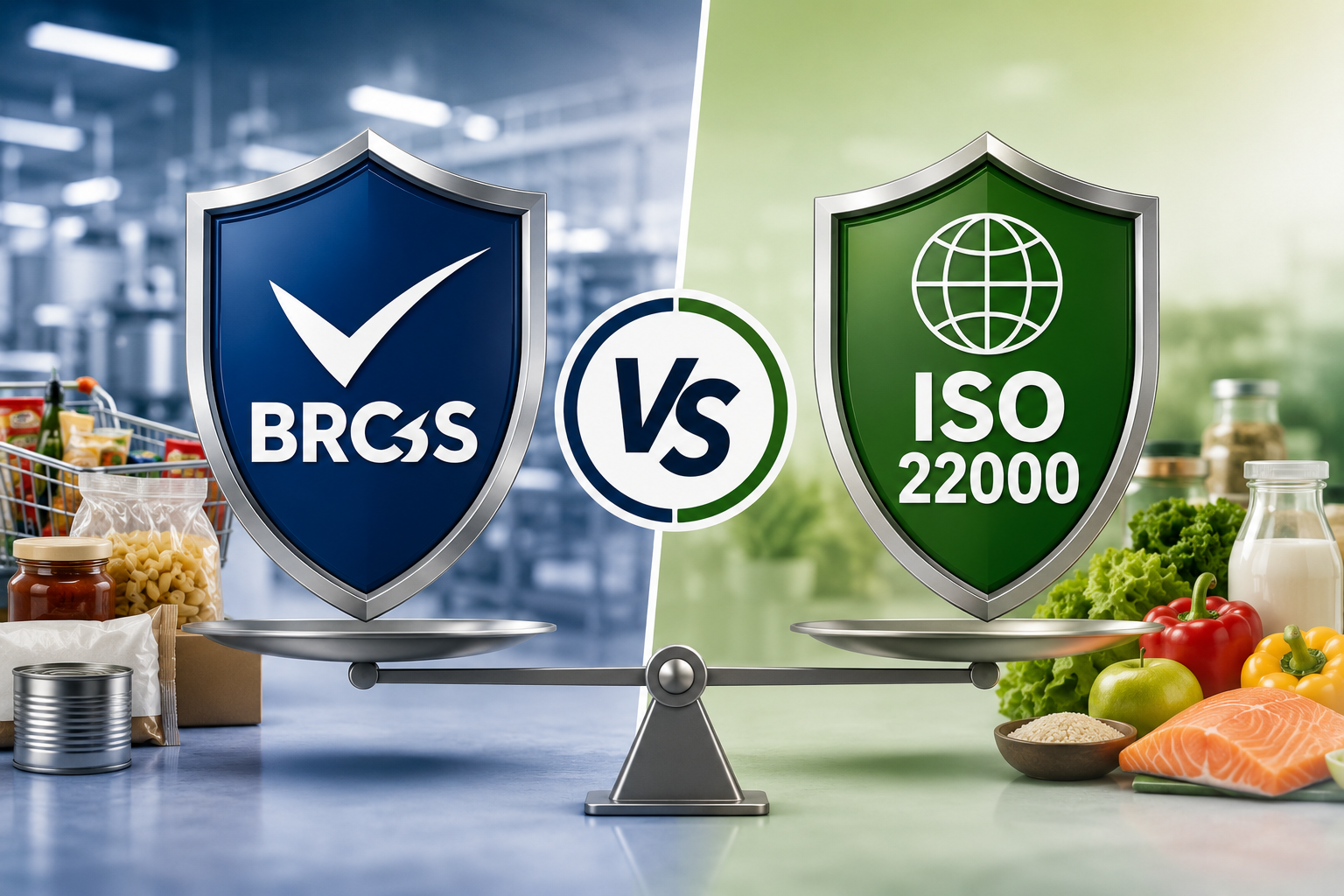
BRCGS vs ISO 22000: Which Certification is Better?
Food safety and quality are paramount considerations for any organisation in the food industry today. More and more food producers, food processing organisations, packaging, and exporting companies have been embracing internationally acclaimed certification schemes in pursuit of meeting international standards and streamlining their operations. The most common certification schemes include BRCGS and ISO 22000. However, many companies frequently ponder over which scheme to adopt.
Both schemes have an excellent reputation in the international arena. Nonetheless, they have distinct business and market needs that they cater to. With the help of experts in the field like Global Certification for Quality and Sustainability (GCQS), organisations can embark on the appropriate course of certification.
1. Understanding BRCGS Certification
Brand Reputation through Compliance Global Standards (BRCGS), a renowned food safety standard, was first designed by the British Retail Consortium. This certification is widely acknowledged by retailers, food product manufacturers, and suppliers all over the world.
BRCGS Certification involves the following:
- Food Safety Management
- Product Quality
- Control Systems
- Risk Management
- Supplier Management
- Compliance with laws
The BRCGS certification is preferred by many organizations which are into exporting food products to countries like the UK, Europe, and North America. International retailers have a special preference for BRCGS-certified suppliers due to their high standards of food safety and quality.
Many business organisations often seek guidance from BRCGS-certified consultants in India.
2. What is ISO 22000 Certification?
The “ISO 22000” refers to an international food safety management system standard that has been established by the International Organisation for Standardisation (ISO). The standard covers all organisations participating in different processes like production, processing, packaging, and distribution of foods in the food chain.
ISO 22000 certification has become very popular in India among food producers who desire to upgrade their food safety management system and attain international recognition.
Some of the key factors that ISO 22000 covers include the following:
- HACCP – Hazard Analysis & Critical Control Point
- Risk-based approach
- Food Safety Communication
- Continuous Improvement
- Integration with Management Systems
A key strength of the ISO 22000 standard is that it is highly adaptable, as it can be easily incorporated into other ISO standards like ISO 9001 and ISO 14001.
3. Key Differences Between BRCGS and ISO 22000
Nevertheless, there are also distinct differences between the two, even if they have the same goal of ensuring the safety of food.
3. 1. Industry Acceptance
While BRCGS is largely accepted by major retailers and supermarkets, particularly in the UK and Europe, ISO 22000 is internationally accepted. Companies that deal in private-label products or ship products overseas would find the BRCGS standard more beneficial.
3.2. Certification Audit Approach
The certification audits for BRCGS tend to be more detailed and specific. The auditors perform a detailed examination of the business’s procedures, facilities, documents, and safety practices for their products.
ISO 22000 certification audits, on the other hand, focus primarily on the management system, risk assessment, and process improvements.
3.3. Documentation Requirements
It is evident that BRCGS demands better documentation and processes than ISO 22000. The assistance of BRCGS certification consultants in India would help fulfill technical requirements effectively.
On the other hand, the process of documentation is flexible under ISO 22000, which allows companies to tailor processes depending on their requirements.
3.4. Customer Requirement
If your clients require BRCGS certification, it becomes necessary for your business in order to continue exporting products and goods.
On the other hand, if you want to have internationally accepted standards regarding food safety management systems, then opting for ISO 22000 food safety certification in India would be an ideal choice.
4. Which Certification is Better?
This is not a universal solution since the optimal choice of certification will be based on your needs, the needs of your customers, and the targeted market.
Opt for BRCGS When:
- You supply food products to foreign retailers
- Your customers have the requirement for BRCGS
- You need more assurance from your retail partners
- Product quality and compliance matter a great deal to you
Go for ISO 22000. When:
- You need a globally accepted food safety management system
- You wish for an integration with other ISO standards
- You prefer having the flexibility in its implementation
- You cater to diverse sectors within the food chain
In some instances, firms even go for both certifications simultaneously.
5. Benefits of Food Safety Certification
Whether you select BRCGS or ISO 22000 certification, there are numerous advantages of certification, including:
5.1 Improvement in Food Safety
Certifications assist organisations in improving food safety risks.
5.2 Improve Client Credibility
Certifications ensure higher credibility among clients, retail organisations, and international clients.
5.3 Increased Compliance Levels
They ensure compliance with food safety rules from various nations.
5.4 Increased Business Prospects
Since most international retail chains favour certified suppliers, there are increased business prospects.
5.5 Increased Efficiency
Efficiency results when systems are well defined.
6. Why Choose Global Certification for Quality and Sustainability (GCQS)?
Implementation of food safety certifications is not an easy task. The process of implementing certifications becomes easy with the help of Global Certification for Quality and Sustainability (GCQS). This organisation provides you with consultation services, training sessions, documentation, and preparations for auditing to assist you in implementing food safety certifications.
If you want ISO 22000 food safety certifications in India or BRCGS food safety certification consultancy services in India, Global Certification for Quality and Sustainability will provide you with all that you need according to your business requirements.
7. Conclusion
Both the BRCGS and ISO 22000 certifications are equally valuable in improving food safety, efficiency, and reputation in international commerce. The decision depends on the expectations of the client, the intention to sell abroad, and the nature of the enterprise.
In case the primary objective is compliance with the retail requirements and international retailing, the BRCGS certification may prove to be preferable. On the contrary, in case the flexibility of the food safety management system is required, then ISO 22000 certification is highly recommended.
The assistance provided by the GCQS will ensure that your company adopts the most appropriate certification program.