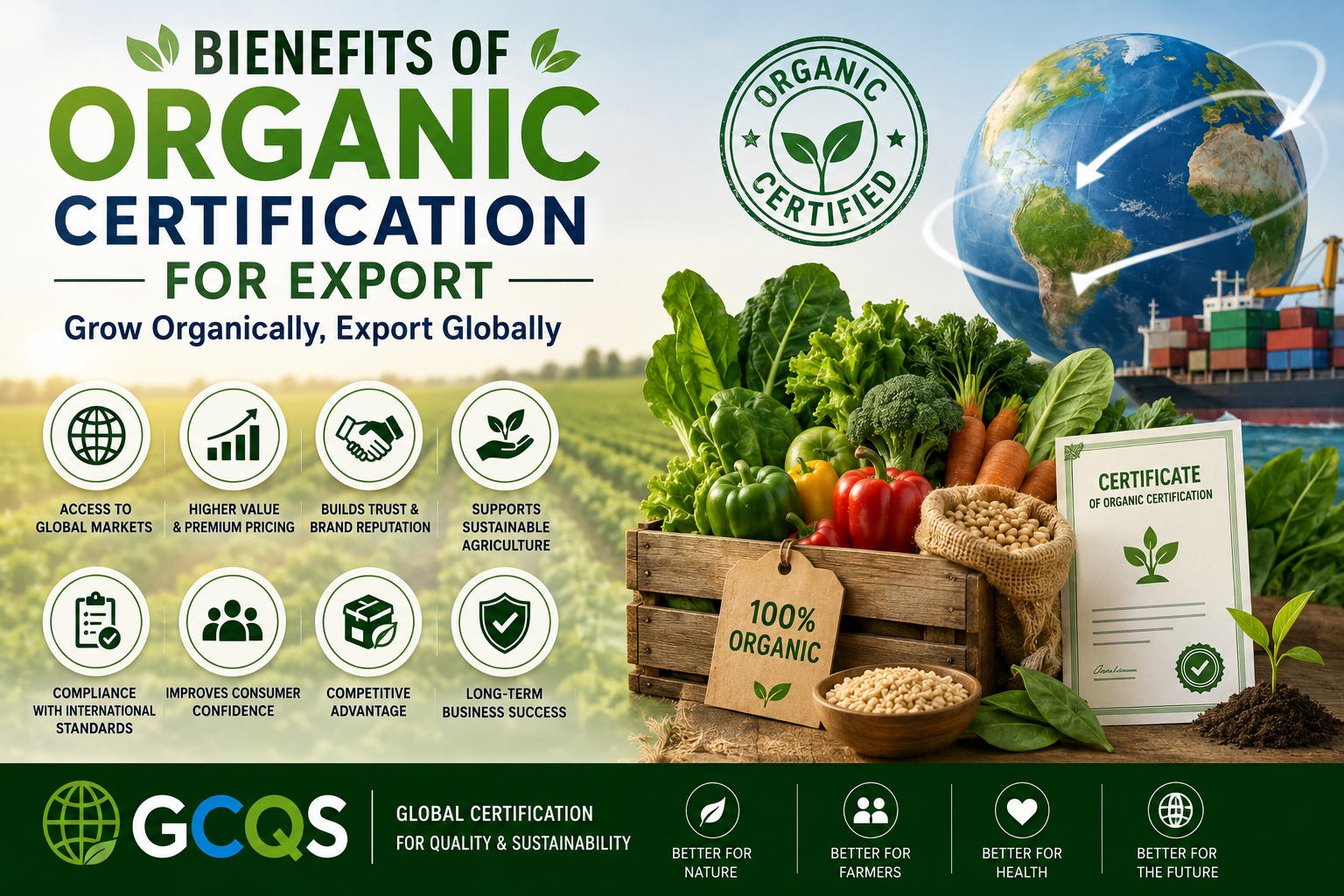
Benefits of Organic Certification for Export
Consumers in the present-day international market have developed a higher awareness towards the quality and environmental sustainability of foods. Therefore, the need for organic products in the international market is increasing exponentially, and thus, for the benefit of farmers and food processing industries as well as those involved in the export of agricultural produce, gaining Organic farming certification is of vital importance.
GCQS offers businesses an international organic certification that provides them with an opportunity to gain recognition in highly competitive international markets. Not only will organic certification improve the credibility of their products, but it will also provide access to premium buyers in the international market.
1. What is Organic Farming Certification?
Certifying organic agriculture is based on the certification procedure that is aimed at verifying that the produced agricultural goods are developed in accordance with the existing practices of organic agriculture. The above practices presuppose the absence of overuse of synthetic fertilisers, pesticides, GMOs, and chemicals.
Among other advantages of organic farming are:
- Environmental sustainability
- Soil improvement
- Biodiversity preservation
- Animal care
- Production of healthy foods free from any chemicals
Certification makes it possible to promote exports of the certified goods.
2. Why Organic Certification is Important for Export
Most nations impose stringent rules concerning the importation of food and agricultural products. Before allowing international companies to import their products, they must show evidence that they comply with organic farming standards. Otherwise, it might be difficult for such companies to access the best international marketplaces.
With Organic farming certification, one can:
- Comply with international importation regulations
- Boost credibility in the industry
- Access top international markets
- Develop strong relationships with buyers
- Enhance corporate image and reputation
Companies like Global Certification for Quality and Sustainability can assist firms in becoming certified.
3. Access to International Markets
The easiest advantage of organic certification comes in the form of increased market access. Many nations, including the US, Germany, Canada, Australia, Japan, and several other European countries, require large amounts of organic certified products. Buyers in such places prefer to purchase products from companies that have received the necessary organic certifications because they are sure about product quality and standards.
Exporters benefit by receiving certification, as it gives them an edge when participating in international markets and retail networks. Exporters are encouraged to participate in global markets due to support from Global Certification for Quality and Sustainability (GCQS).
4. Higher Product Value and Premium Pricing
Products that are organic in nature are always costly compared to other products in the international market. Consumers will be willing to pay more for their health and environmentally safe products.
The benefits of organic certification for exporting products are as follows:
- Value addition
- Selling to premium customers
- Generating more profits
- Building a strong international brand name
In terms of exporting agricultural products like spices, cereals, tea, fruits, vegetables, and processed foods, organic certification gives them an upper hand among other products.
5. Builds Trust and Brand Reputation
Trust is one of the key determinants of success in international trade. Consumers require guarantees regarding the genuineness, safety, and ethical production of goods. The organic certification becomes an evidence of high-quality and strictly monitored products.
Having a reputable certification authority such as Global Certification for Quality and Sustainability (GCQS) enables companies to establish trust with:
- Foreign importers
- Grocery stores
- Wholesalers
- Conscious consumers
Companies that receive certification tend to benefit from ongoing business due to buyers’ trust in the product.
6. Supports Sustainable Agriculture
Sustainable agriculture is one of the key principles of organic farming. The benefits of such a practice include the following:
- Increased fertility of the soil
- Reduction in pollution from chemicals
- Efficient water conservation
- Increase in biological diversity
- Low ecological footprint
With an increase in sustainable agriculture awareness throughout the world, international buyers tend to prefer suppliers who use sustainable and ethical farming practices.
7. Proper Compliance with International Standards
Export of agricultural products is associated with strict standards for documentation and product quality in place. Organic certification plays a vital role in providing such services.
Organically certified exporting firms are more likely to comply with the following:
- Inspections from abroad
- Import requirements of other countries
- Audits by buyers
- Traceability requirements
Global Certification for Quality and Sustainability (GCQS) will help businesses comply with such standards.
8. Improves Consumer Confidence
Modern consumers are aware of food safety and environmental issues. They make an effort to seek organic labels when making their purchases. Organic certification means that the products are made free of any toxins, and ethical farming principles are followed.
This is advantageous to the exporter in many ways:
- Increase exports internationally
- Boost customer loyalty
- Explore new health-conscious markets
- Enhance product acceptability around the world
Branding as certified organic is a powerful tool that affects purchase decision-making in the highly competitive export environment.
9. Ensures Business Success in the Long Term
Organic certification is about more than just meeting regulations. It is also an effective strategy aimed at ensuring long-term growth and development.
Thanks to the professional support provided by Global Certification for Quality and Sustainability (GCQS), businesses have a great opportunity to develop a sustainable business model.
10. Conclusion
There is an increasing demand for organic products across the globe, which makes Organic farming certification a very important factor for those who want to excel at an international level. Organic farming certification increases credibility, improves market access, helps earn more profits, and is also sustainable in agriculture.
Through association with GCQS, your company will be able to handle the certification process with ease. There is stiff competition in the export sector, and organic certification plays a great role towards achieving success internationally.