Industries That Need ISO 22000 Certification in India
Safety and security of food have become one of the most important aspects for any business. Customers today are more concerned about the quality, hygiene, and safety of the food products they purchase. In order to cater to these needs, many companies opt for ISO 22000 food safety certification in India. ISO 22000 certification is an internationally recognised process through which an organisation can develop a reliable FSMS (food safety management system).
In this blog, we will discuss what types of industries require the ISO 22000 certification for food safety in India, why the certification is necessary, and why companies need help from ISO 22000 consultants in India to implement the same successfully. At Global Certification for Quality and Sustainability (GCQS), we help businesses establish effective food safety management systems and achieve ISO 22000 certification with confidence.
1. What is ISO 22000 Certification?
ISO 22000 is an international standard for the establishment of requirements for the food safety management system. This standard integrates the concepts of HACCP with preventive risk management methods for the identification and monitoring of the safety hazards associated with food.
The ISO 22000 certification is relevant to all organisations working along the supply chain of food products, irrespective of their size. The certification helps the organisation to show its commitment towards food safety and customer satisfaction.
2. Why is ISO 22000 Important in India?
The food industry of India is one of the largest and fastest-growing industries across the globe. Due to rising export numbers and stringent food laws, there is a need to maintain proper standards of food safety. The ISO 22000 food safety certificate in India is beneficial for organisations as it enables them to:
Ensure food safety
Comply with national as well as international standards of regulation
- Prevent food contamination hazards
- Maintain high standards of efficiency
- Gain consumer trust
- Enter international markets
An organisation conducting the ISO 22000 audit process can recognise and manage risks related to food safety issues.
3. Industries That Need ISO 22000 Certification in India
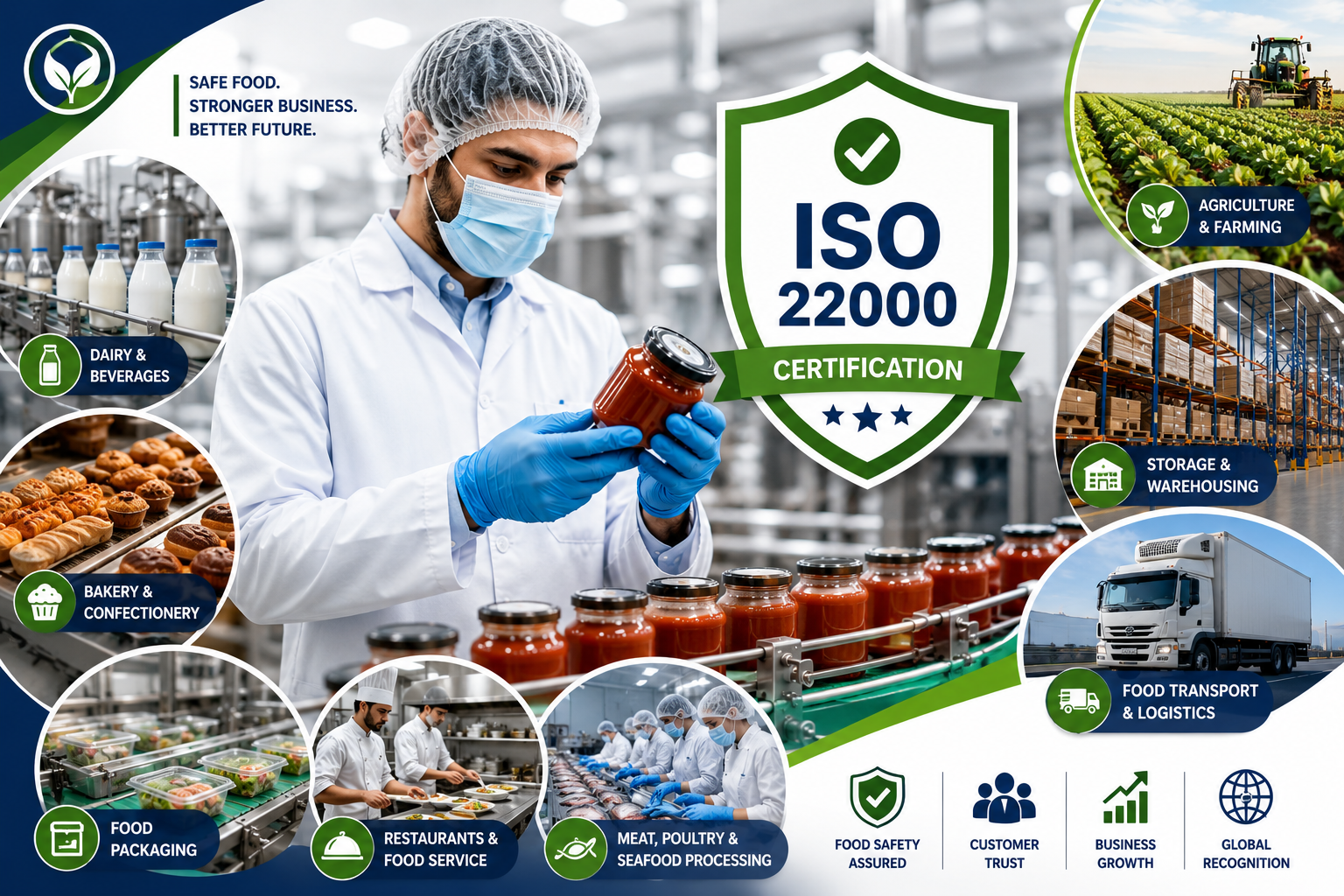
3.1. Food Manufacturing Industry
Some of the key recipients of ISO 22000 certification are the food manufacturers. This is irrelevant to the type of food they manufacture as far as the assurance of the safety of their food products is concerned. These include:
Examples include:
- Manufacturers of packaged food products
- Manufacturers of dairy products
- Manufacturers of beverages
- Manufacturers of frozen food products
- Manufacturers of confectionery/bakery products
3.2. Food Processing Industry
These companies deal with agricultural commodities that need processing to become food commodities. There are various stages in the process during which there could be potential contamination.
A food safety management system helps food processors detect hazards and critical points in the processes.
Some common sectors are:
- Fruit and Vegetable Processing
- Meat processing
- Seafood processing
- Grain and Cereal Processing
- Spice manufacturing
3.3. Food Packaging Industry
Food preservation depends heavily on proper packaging, which prevents the contamination of foods. Organisations that produce packaging materials used in food should be careful that their packaging materials do not pose any health risk to consumers.
ISO 22000 is an appropriate certification for packaging manufacturing organisations to adopt to ensure that they observe appropriate hygienic standards in producing the packaging material.
Some of these include:
- Producers of plastic packaging for foods
- Glass packaging producers
- Producers of metal cans
- Manufacturers of flexible packaging materials
3.4. Restaurants and Food Service Operations
Restaurants, hotels, coffee shops, catering services, and cloud kitchens play a very important role in ensuring the health of consumers by preparing foods for them.
FSMS certification assists food service operations in ensuring:
- Improved hygiene practices
- Reduced cases of food poisoning
- Standardisation of the food preparation process
- Enhanced customer confidence
The certification is especially beneficial to restaurant chains.
3.5. Agriculture and Farming Sector
Food safety starts at the very beginning. For agricultural producers and farming companies, ISO 22000 certification can be extremely beneficial for ensuring that food products are grown, harvested, and stored safely.
Sectors include:
- Organic farms
- Poultry farms
- Dairy farms
- Aquaculture companies
- Agricultural cooperatives
With food safety measures at the farm level, a company will minimize its risk of contaminating food products during the entire production process.
3.6. Food Storage and Warehousing Companies
Food storage warehouses can help protect products’ safety. The wrong temperature in food storage can cause spoilage and other problems.
Through ISO 22000, food storage companies can introduce control measures for:
- Monitoring temperatures
- Controlling pests
- Handling inventory
- Managing hygiene
This ensures food products remain safe during storage and distribution.
3.7. Food Transportation and Logistics Providers
The transportation of goods is integral to the distribution chains of food items. Transportation of food must take place under controlled conditions to prevent contamination.
ISO 22000 logistics companies are committed to ensuring food safety in food transportation. This becomes important for:
- Cold chain logistics companies
- Dairy transportation companies
- Frozen foods logistics companies
- Export logistics companies
3.8. Food Retailers/Food Distribution Companies
Food retailers and food distribution companies deal with enormous amounts of food every day. Managing food safety in food management processes is very important.
- Certification will assist food retailers with:
- Effective management of supplier systems
- Traceability of food products
- Quality management systems
4. The Role of ISO 22000 Consultants in India
It is difficult to implement the requirements of ISO 22000, especially for those enterprises that do not have much experience with food safety standards. Global Certification for Quality and Sustainability (GCQS) provides expert guidance to organizations seeking ISO 22000 certification, helping them implement food safety best practices and meet certification requirements efficiently. ISO 22000 consultant in India’s job is to familiarise the clients with the requirements of ISO 22000, prepare required documentation, provide training for staff members, and facilitate the certification process.
With their assistance, the task will be significantly simpler, and there will be more chances for passing the audit successfully.
5. Conclusion
Considering the fact that food safety regulations constantly change, food safety and security must be maintained appropriately by every enterprise. ISO 22000 food safety certification in India would be helpful for food manufacturers, food processors, hotels, food transportation companies, and other types of businesses.
Food safety and its compliance are important not only for protecting clients’ interests but also for gaining competitive advantages. ISO 22000 consultant in India can help any company obtain certification. With the support of Global Certification for Quality and Sustainability (GCQS), businesses can streamline their certification journey, strengthen food safety compliance, and build trust with customers and regulatory authorities.