Organic Farming Certification Process in India (NPOP & NOP)
With the ever-increasing demand for food that is chemical-free and produced sustainably both locally and internationally, having certification for organic agriculture has become very crucial for farmers, producers, and agribusiness organisations. Certification not only increases consumer confidence but also makes one eligible for entry into premium markets and export.
Certification procedures for organic agriculture in India will be instrumental for farmers not only to ensure compliance with standards both nationally and internationally, but also to ensure that their produce qualifies in terms of quality standards. This is regardless of whether you want to operate in the Indian market or export your organic agricultural produce.
1. What is Organic Farming Certification?
Organic farming certification is the formal certification process of agricultural produce being produced, processed, and handled based on the set standards of organic production.
The certification ensures that farming processes do not involve the use of any artificial fertilisers, pesticides, GMOs, or other prohibited materials but rather promotes environmental sustainability and soil health.
Certified organic products are more credible and hence have higher prices in the market.
2. Importance of Organic Certification in India
There are various benefits associated with obtaining organic certification in India, such as:
- Increased access to markets both domestically and internationally
- Consumer trust due to the certified quality of the product
- Better pricing of certified organic produce
- Following export standards
- Practice of environmentally sustainable agriculture
- Enhancing the reputation of the brand for future growth
With increasing awareness about healthy foods and sustainable production, certified organic products are the most sought-after products globally.
3. Understanding NPOP & NOP Certification in India
Organic producers who are planning to sell their products need to have knowledge about the two main certification standards.
3.1 National Programme for Organic Production (NPOP)
National Programme for Organic Production (NPOP) is the organic certification standard recognised in India. This program sets standards for organic production, processing and certification.
NPOP certification is highly recognised and accepted in domestic business and by several international business sectors, and it is important for organic producers in India.
3.2 National Organic Program (NOP)
The National Organic Program (NOP) is the organic certification standard that was created by the United States Department of Agriculture (USDA).
For companies that plan to export organic agricultural products to the United States, NOP certification is required. Thus, NPOP and NOP certification will help producers to enter the domestic and international markets.
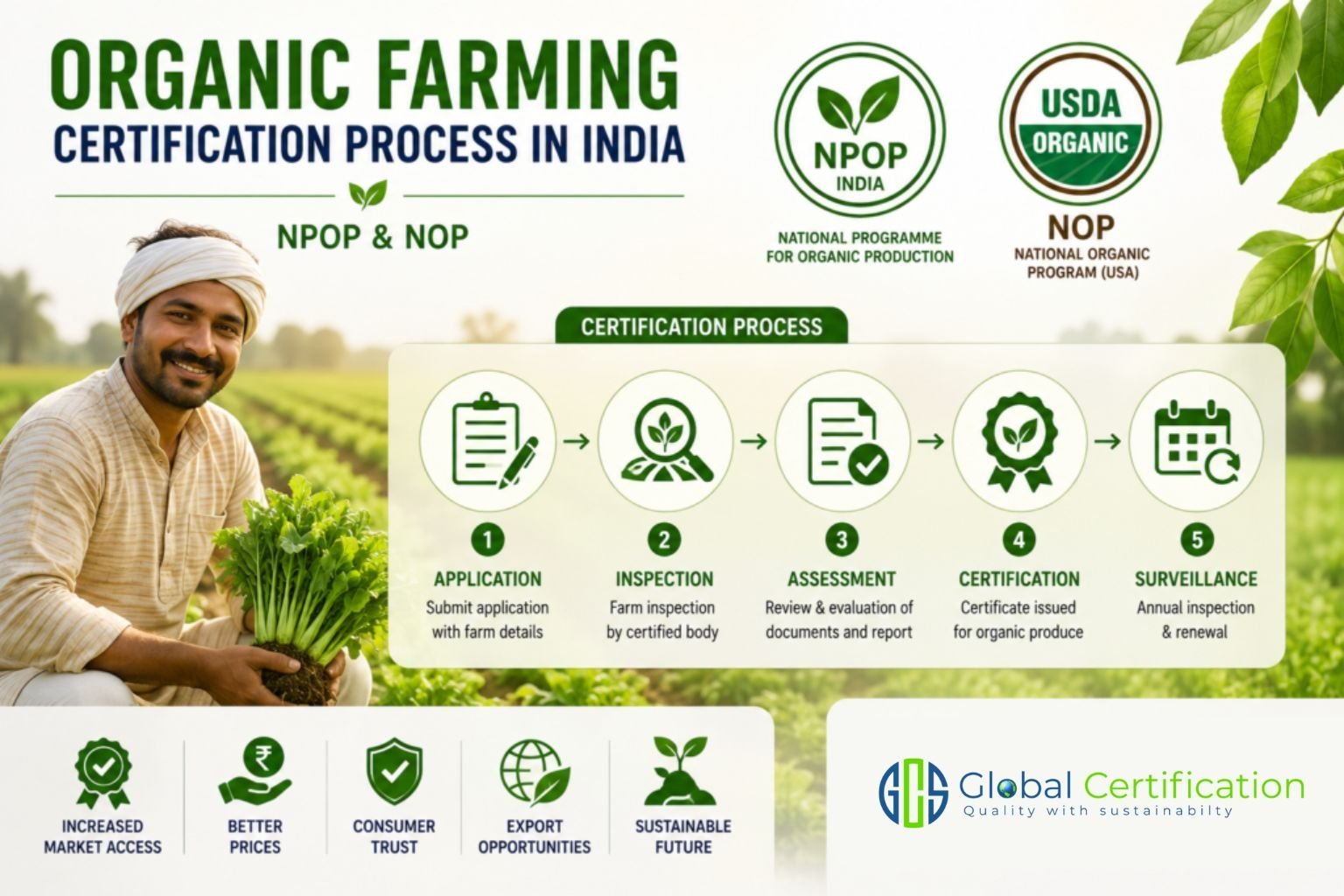
4. Organic Farming Certification Process in India
There are several stages in the organic farming certification process followed in India.
4.1 Stage 1 – Application
First, farmers or producers need to submit the application form to the certified body. There should be information on the farm itself, the crops cultivated, growing techniques used, land history and production records.
4.2 Stage 2 – Inspection of the Farm
The next step will be a visit by the inspector to the farm. This expert checks farming techniques, storage facilities, documentation, and compliance with organic standards.
4.3 Stage 3 – Assessment and Evaluation
After the inspection of the farm, the certified body examines the report provided together with other documents in order to confirm that the organic criteria are met.
If necessary, the applicant can undertake certain changes.
4.4 Stage 4 – Certification
If everything is alright, the certificate is issued. After that, the farmer can sell his products as organic under the certification standards.
4.5 Stage 5 – Renewal and Surveillance of Organic Certification
Organic certification is not a permanent certificate. It requires regular inspections and annual renewal.
5. Organic Certification Process for Farmers
Certification process for farmers needs meticulous planning and appropriate documentation on the following:
- farm management methods
- crop production methods
- use of organic inputs
- harvesting data
- storage and transport information
- sales details
Effective record keeping will enhance efficiency in the process of inspection and certification.
6. Challenges in the Certification Process
Though the process of certification is relatively easy, farmers might face some challenges, such as:
- conversion period from conventional farming to organic farming
- documenting all information
- certification criteria
- contamination from neighbouring farms
- inspection criteria
Certification experts can make the whole process easy for you.
7. Why Choose Global Certification for Quality and Sustainability?
Global Certification for Quality and Sustainability ensures professional assistance throughout the entire certification process. The professionals help farmers, producer groups, exporters, and agribusinesses to fulfil the national and international standards regarding organic farming and products.
The skilled team helps clients undergo the entire process of organic farming certification in India, fulfilling the NPOP and NOP requirements at the same time.
8. Conclusion
In view of the rising demand for certified organic products, obtaining organic farming certification becomes an inevitable part of contemporary agriculture. Familiarity with the process of organic farming certification in India helps to fulfil all the necessary regulations, increase the credibility of the products and enter prosperous markets.
If you need organic certification in India, export certification in India through NPOP & NOP certification in India or have any questions concerning the organic certification process for farmers, we will be glad to help you with it.