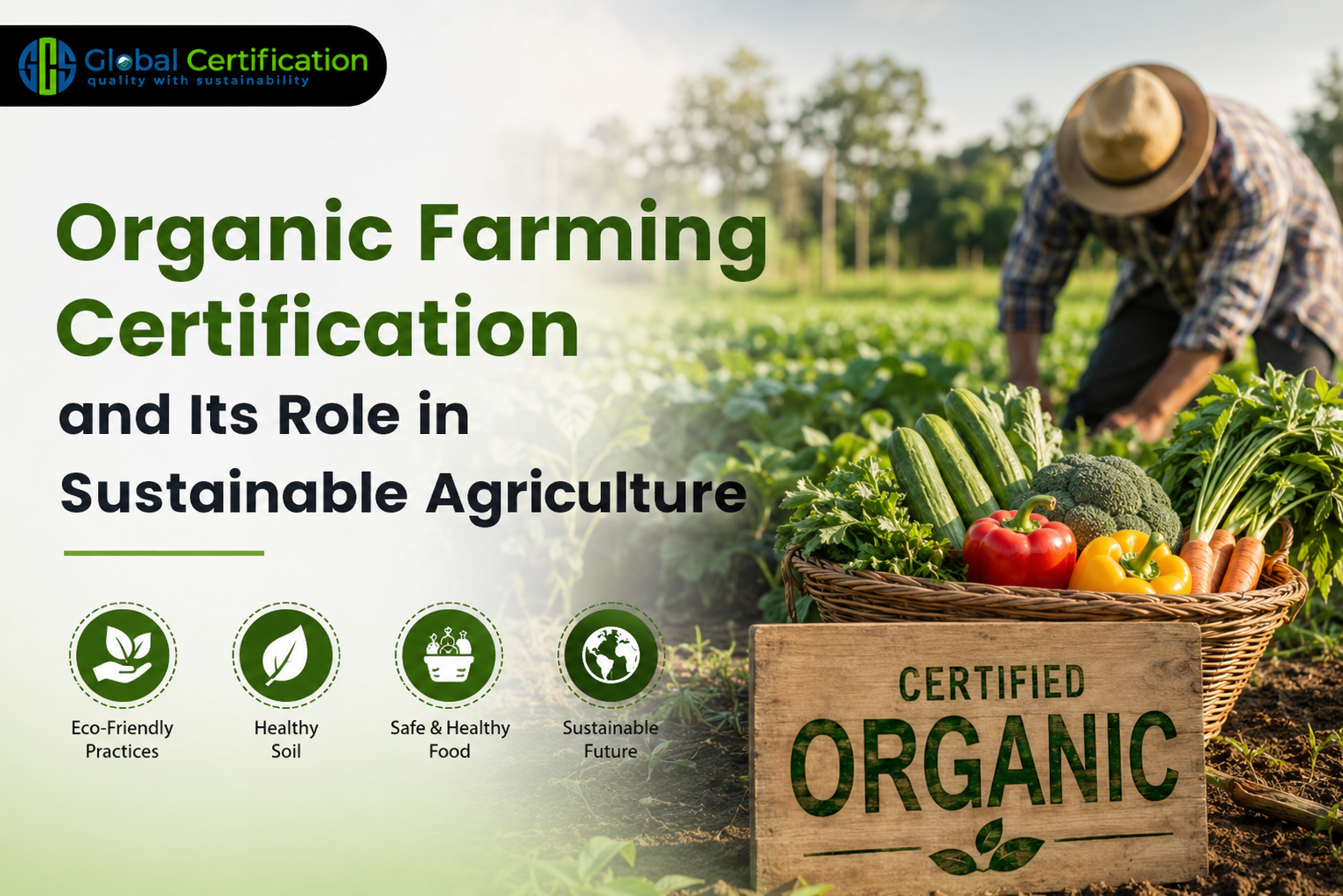
Organic Farming Certification and Its Role in Sustainable Agriculture
The agricultural sector in the modern world is experiencing significant changes, with an emphasis placed on environmentally friendly and sustainable approaches to farming by farmers, consumers, and agricultural firms. One of the aspects that plays a significant part in facilitating these changes is organic farming certification, as it fosters trust and sets quality standards.
For farmers who would like their efforts to be recognised in terms of being organic and consumers who are interested in learning about food production in terms of sustainability and quality, certification plays a vital role. Such organisations as Global Certification for Quality and Sustainability help agricultural businesses to meet certification standards.
1. What Is Organic Farming Certification?
Organic farming certification is a legal process of certifying the organic character of agricultural produce in accordance with some well-recognized standards. In other words, it guarantees that the agricultural practices do not involve any banned synthetic chemicals, enhance the diversity of biological life, maintain soil fertility, and maintain ecological balance.
The certification process involves checking, documenting, standardising, and monitoring the agricultural practices to see if they comply with the recognised standards.
To get certified, the farmer can demonstrate his commitment to organic agriculture in addition to gaining credibility for his agricultural produce in the market.
2. Importance of Organic Farming Certification
Demand for organic products increases because people become more aware of food safety and environmental conservation concerns. The certification process helps ensure that the produce is organically cultivated.
There are several notable advantages of the process, including:
- Building up the consumer trust
- Gaining access to markets (local and international)
- Environmental sustainability of the farming process
- Improving soil quality and ecological balance
- Enhancing the value of the product
- Making the agriculture supply chain transparent
Under the right Sustainable Agriculture Certification, farmers will be able to prove their commitment to the practice of organic agriculture.
3. Organic Certification In India: Current Landscape
India has emerged as one of the leading nations in encouraging organic agricultural systems. Systems have been put in place for certified organic agriculture by the Indian government and related regulatory agencies.
Organic Certification In India is mainly controlled using existing systems that are put in place to ensure compliance and uniformity in agricultural operations.
Areas of evaluation in Indian certification include:
- Farm Management
- Input Materials/Fertilizers
- Pest & Disease Control
- Harvest and Storage
- Tracing of Product
- Maintaining Records
Due to rising demand, certified organic products are increasingly being recognized in the market.
4. Understanding Organic Farming Standards In India
In order to achieve authenticity and customer satisfaction, farmers have to adhere to certain Organic Farming Standards In India.
The main emphasis of organic farming standards includes the following points:
4.1 Management of Soil Health
Organic farmers believe that nature should be utilized in improving soil health.
4.2 Chemical-free Products
Usage of chemical fertilizers, pesticides, and genetically-modified products should be avoided to the maximum extent possible.
4.3 Protection of Biodiversity
Biodiversity can be improved by means of crop rotation and proper utilization of land.
4.4 Animal welfare
When animals are raised for organic farming purposes, standards are designed to protect their interests.
4.5 Traceability
Organic farmers keep track of all details related to the farming process.
5. How To Get Organic Farming Certification
Farmers often seek to know How To Get Organic Farming Certification and the processes involved. Although the processes may differ from one certification requirement to another, the general processes may include the following steps:
5.1. Assess the Present Agricultural Practices
Assess your practices for any conformity to organic practices.
5.2. Document the Information
Documents about the history of your farm, farming processes, products, and land must be documented.
5.3. Make a Request for Certification
Request for certification through the designated body of certification.
5.4. Inspect Your Farm
Inspection is carried out to establish whether the farm conforms to the organic practices.
5.5. Assessment and Approval
The body conducting the inspection assesses the information and approves for certification.
5.6. Continual Monitoring
Organic certification is dependent upon continual monitoring.
Knowing How To Get Organic Farming Certification will help you prepare well for certification.
6. The Connection Between Certification and Sustainable Agriculture
Sustainability in agriculture is more than producing large quantities. It centers on ensuring the conservation of natural resources and fostering economic sustainability.
Sustainable Agriculture Certification inspires growers to engage in activities such as:
- Minimizing environmental effects
- Boosting water conservation
- Increasing resistance to climatic conditions
- Creating stronger local ecologies
- Increasing productivity
Through the sustainable use of the set standards, there will be noticeable benefits within agricultural communities.
7. How Global Certification for Quality and Sustainability Fosters Agricultural Sustainability
Global Certification for Quality and Sustainability (GCQS) has made efforts to ensure quality assurance and responsible certification in various industries, one of which is agriculture.
Through certification efforts, Global Certification for Quality and Sustainability ensures that firms and producers comply with certain standards. This increases their credibility and fosters sustainability.
With professional certification partners, the process will become easier for you.
8. Conclusion
With the development of agriculture to comply with consumer needs and environmental issues, Organic farming certification has become a necessity. There are many advantages in the process that are not only beneficial for the producer but also for the consumer.
Since people have been getting more informed about Organic Certification in India, Organic Farming Standards in India, and Sustainable Agriculture Certification, this is the perfect time for producers to adapt and benefit from such practices.