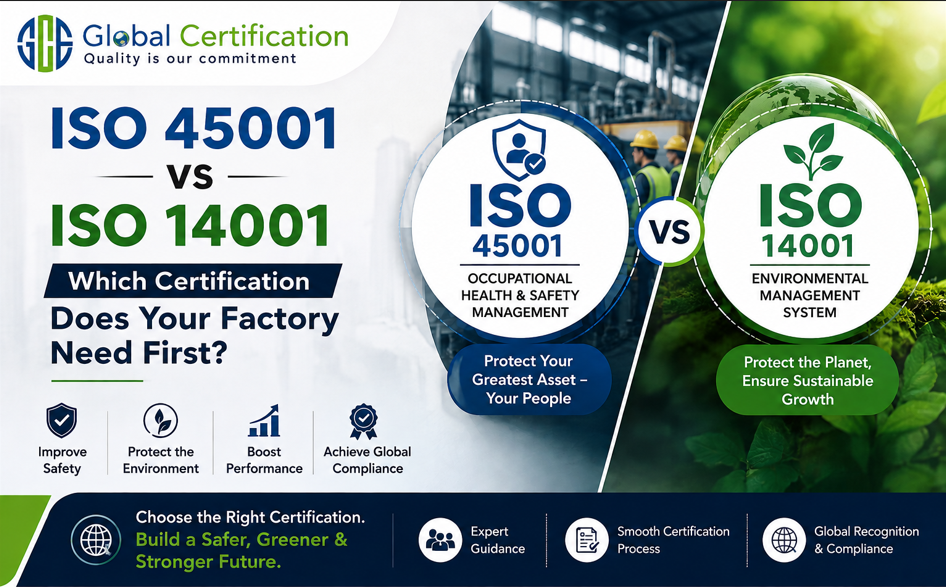
ISO 45001:2018 certification demonstrates that an organization has implemented a comprehensive occupational health and safety management system in compliance with international best practices. The certification is granted by accredited certification bodies following a rigorous assessment of the organization’s OHSMS. This standard is applicable to organizations of all sizes and industries, emphasizing the importance of safety and health in the workplace.
- Improved Workplace Safety:Helps organizations create a safer working environment, reducing the risk of work-related injuries and illnesses.
- Regulatory Compliance:Assists in meeting legal and regulatory requirements related to occupational health and safety.
- Enhanced Reputation:Demonstrates a commitment to health and safety, building trust with employees, customers, and stakeholders.
- Reduced Costs:Lowers costs associated with workplace accidents, including medical expenses, lost productivity, and insurance premiums.
- Risk Management:Provides a systematic approach to identifying and managing health and safety risks.
- Employee Morale:Improves employee morale and retention by showing a commitment to their well-being.
- Competitive Advantage:Enhances the organization’s reputation and competitive edge in the market.
-
The certification process for ISO 45001:2018 involves several steps to ensure that the organization’s OHSMS meets the standard’s requirements:
Gap Analysis:
- Conduct an initial assessment to identify gaps between the current health and safety practices and the ISO 45001 requirements.
Planning and Training:
- Develop a plan to address identified gaps. Train employees on the principles and requirements of ISO 45001 and the OHSMS.
Documentation:
- Create or update necessary documentation, including the health and safety policy, objectives, and procedures, to comply with ISO 45001.
Implementation:
- Implement the OHSMS across the organization, ensuring all processes are followed as documented.
Internal Audit:
- Conduct internal audits to evaluate the effectiveness of the OHSMS and ensure compliance with ISO 45001.
Management Review:
- Top management should review the OHSMS to ensure its continuing suitability, adequacy, and effectiveness.
Certification Audit:
- An accredited certification body conducts a certification audit, including a thorough review of the OHSMS documentation and an on-site assessment of the implementation.
Certification Issuance:
- If the audit is successful, the certification body issues an ISO 45001 certificate, valid for three years, subject to annual surveillance audits.
Continuous Improvement and Surveillance Audits:
- Maintain the OHSMS and continually improve processes. Certification bodies conduct annual surveillance audits to ensure ongoing compliance with ISO 45001.
Safer Working Conditions:
- Reduces workplace hazards and promotes a safer working environment.
Legal Compliance:
- Ensures compliance with health and safety regulations, avoiding legal penalties and fines.
Cost Reduction:
- Lowers the financial impact of accidents and illnesses through proactive risk management.
Increased Productivity:
- Enhances productivity by minimizing disruptions caused by accidents and health issues.
Employee Engagement:
- Encourages worker participation in health and safety initiatives, boosting morale and involvement.
Risk Management:
- Provides a structured approach to managing occupational health and safety risks.
Reputation Enhancement:
- Builds a positive reputation as a safe and responsible organization.
Sustainability:
- Contributes to the long-term sustainability of the organization by prioritizing health and safety.
- Manufacturing: To ensure the safety of workers operating machinery and equipment.
- Construction: To manage high-risk activities and enhance worker safety on construction sites.
- Healthcare: To protect healthcare workers from occupational hazards and improve patient safety.
- Transportation: To ensure the safety of workers and passengers in the transportation sector.
- Public Sector: To maintain safe working conditions for employees in public services.
- Retail and Hospitality: To ensure the health and safety of employees and customers in retail stores, hotels, and restaurants.
- Education: To create a safe learning and working environment for students and staff.