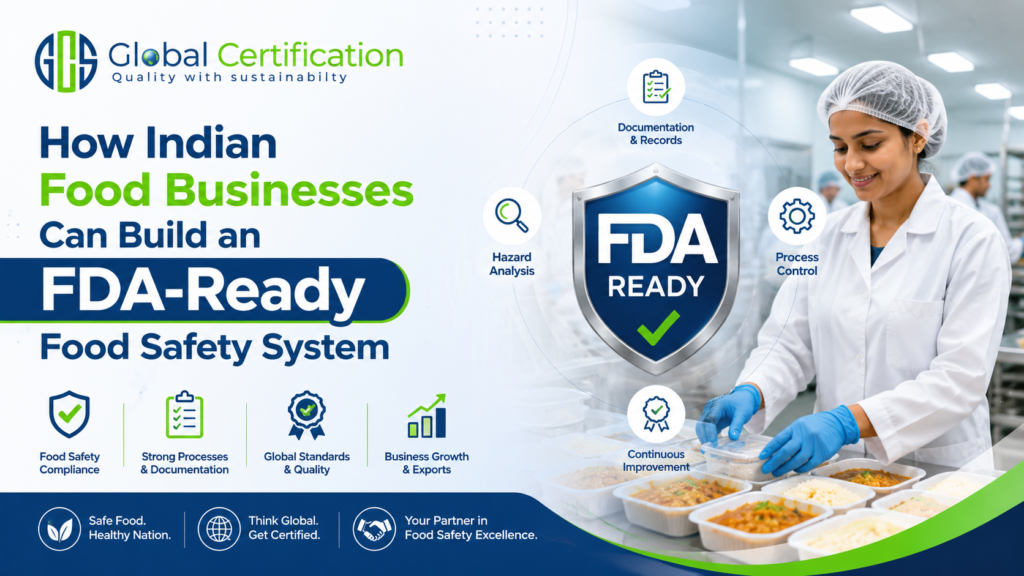
How Indian Food Businesses Can Build an FDA-Ready Food Safety System
There can be a lot of business potential for Indian food manufacturers/exporters when trying to enter the US market. Nevertheless, supplying food items in the US not only entails making good food but also having robust food safety practices in place, adequate documentation, and knowing about one’s obligations as well as about relevant US requirements.
An FDA-compliant food safety system is of great help for Indian food businesses in avoiding possible compliance problems and enhancing the quality of the products and, therefore, gaining increased trust from importers/customers in the US.
Understand FDA Requirements Before Exporting
The first thing Indian food businesses need to do in order to become FDA-compliant is learn about relevant FDA requirements for the particular product line they will export. Indeed, the Food and Drug Administration (FDA) oversees a variety of food items ranging from packaged food and drinks to spices and sauces.
Register the Food Facility
Another key component of FDA’s requirements for food manufacturers involves deciding whether or not the business needs to be registered with the FDA. The facilities used by manufacturers, packers, holders or processors of food meant for distribution in the United States may be subject to the requirement of registration.
It will be wise on the part of the business to ensure that the information about facilities is accurate and timely. However, registration alone cannot be considered compliance with the requirements set forth by the FDA. Registration is just one part of the whole process.
Create Preventative Food Safety Controls Plan
Preventative measures should play a vital role in the process of managing food safety systems nowadays. Indian food manufacturers need to detect any biological, chemical and physical hazards linked with their product line.
A preventive control plan helps to determine preventive measures to be taken, monitoring, corrective actions, verification process and record keeping.
Systematic implementation of preventive measures will be particularly beneficial for businesses interested in FDA compliance for Indian food exporters.
Strengthen Supplier and Ingredient Controls
Food safety needs to begin before ingredients even enter the processing facility. Indian exporters must develop processes to evaluate suppliers and control raw materials coming in.
Supplier verification processes may take into account various factors including the specification of ingredients, certification, testing, past performance of the supplier, and food safety history. Businesses also need to maintain records of their ingredients and their packaging materials.
This particular step is particularly relevant when exporting foods with spices, preservatives, allergens, oils, grains, dairy ingredients, or any other food with special food safety considerations or labeling.
Maintain Record Keeping and Traceability
Keeping records is an essential component of US food exports compliance. Businesses should document all relevant information regarding production, sanitation, temperature controls if applicable, testing, supplier verification, corrective actions, consumer complaints, and product distribution process.
The traceability program needs to allow businesses to pinpoint the origin of raw materials and where the final product was distributed.
Review US Food Labelling Requirements
The labels meant for use in the US should be critically evaluated prior to exporting goods. Issues that businesses ought to consider include the product identity, declaration of ingredients, the labelling of allergens, nutrition labelling when necessary, net quantity, and information about the manufacturer/distributor, among others.
Indian companies must not use the same labels meant for their own use on the Indian market. Since the requirements in the US are not necessarily the same, it is advisable for there to be a regulatory review before going to print.
Sanitation and Hygiene Procedures
A food processing plant that meets FDA requirements will have to have proper sanitation and hygiene procedures put in place. There should be procedures for cleaning equipment, avoiding cross-contamination, pest control, proper production areas, and proper hygiene among employees.
Consider Food Safety Certification
However, just being certified does not necessarily imply that the company meets all the FDA requirements. It will definitely help with building an effective food safety management system for food exporters. According to the needs of the business and its customers, the organisation may consider different food safety management standards and certifications.
Get Ready for Entering into the US Market
When complying with the FDA requirements for Indian food exporters, a business needs to prepare a compliance checklist involving registration of facilities, food safety plan development, preventive controls, supplier management, labelling, sanitation, traceability, documentation, and exporting process.
It might be helpful to collaborate with experienced regulatory and food safety experts when the requirements are complicated. They will explain FDA requirements and identify possible gaps in order to resolve them before shipping to the country.
Conclusion
Creating an FDA-compliant food safety system does not happen just once. It is necessary to constantly monitor, document, train employees, oversee suppliers, have controls in place, and perform reviews.
Indian food firms that want to export into America will benefit greatly from the establishment of such a compliant structure since it will increase the reliability of their exports and minimise unnecessary regulatory risks. Understanding FDA regulations regarding food producers, food safety management systems, record keeping, and proper certification can help Indian firms create the basis for American food exports.