Why Food Manufacturers in India Need BRCGS Certification for Global Market Access
India’s food manufacturing industry is now a big player in the global food game. They export all sorts of stuff like processed foods, dairy, and spices to far-off places. Buyers over there want really high standards when it comes to safety and quality.
Getting BRCGS Food Safety Certification is one way Indian firms get that all-important seal of approval. If they wanna sell in markets like the UK, Europe, or the Middle East, having this cert is almost mandatory now. It’s super helpful to team up with some expert consultants who know the ins and outs of BRCGS in India. That way, companies can make sure they’re complying with everything smoothly and open doors to new sales opportunities abroad.
1. What is BRCGS Food Safety Certification?
BRCGS, or Brand Reputation Compliance Global Standards, is an internationally recognised food safety standard that makes sure food products meet top safety and quality requirements during manufacturing, processing, packing, and storage. The certification covers things like food safety management systems, hazard analysis, and risk assessments. It also stresses quality management practices, facility standards, product control, process control, and personnel training and hygiene.
Nowadays, lots of global retailers, importers, and food service companies need suppliers to have valid BRCGS food safety certification before they can be part of their supply chain.
2. Why Global Buyers Prefer BRCGS-Certified Suppliers
2.1. International Recognition
BRCGS is one of the leading food safety standards globally, recognised by the Global Food Safety Initiative (GFSI). Many big retailers love suppliers with this certification because it tells customers that the suppliers are serious about safety and quality. For Indian manufacturers, getting BRCGS certification is like getting a passport; it makes entering international markets much easier.
2.2. Enhanced Food Safety Compliance
Mishaps in food safety could cause costly recalls and damage a company’s reputation. The BRCGS framework helps manufacturers catch and deal with risks during production, which stops contamination and keeps compliance easy.
2.3. Improved Customer Confidence
International buyers are always on the lookout for reliable suppliers who follow all the rules and satisfy their needs. BRCGS does just that; it ensures that products are created with strict quality controls. As a result, firms with this certification usually come out on top when it comes to competing for export opportunities.
As a result, certified companies often gain a competitive advantage when bidding for export contracts.
3. How BRCGS Certification Supports Export Growth
3.1 Access to International Retail Chains
In Europe and the UK, many top supermarket chains and food distributors need suppliers to have BRCGS certification. Without it, manufacturers might hit walls trying to get into those markets.
3.2 Simplified Supplier Approval Process
BRCGS certification often simplifies things by counting towards supplier approval. It reduces the need for extra audits from buyers and shows adherence to global food safety standards.
3.3 Increased Business Opportunities
Being certified can open up big opportunities too – access to international retailers, global food services, import-export firms, private label deals, and large multinationals.
4. The Role of BRCGS Certification Consultancy
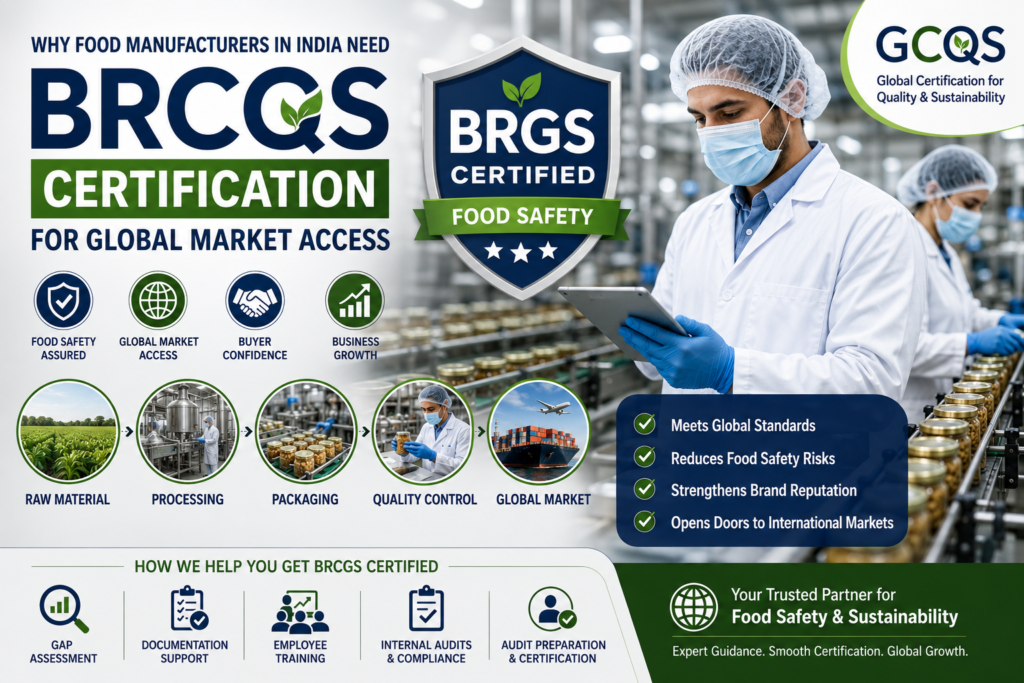
Getting BRCGS certified means you need to really get a grip on their standards, know your documentation inside and out, do internal audits, and follow all the compliance procedures. But hey, there’s help! Professional BRCGS certification consultants can guide you through by doing gap assessments, setting up food safety systems, getting docs ready, training staff, and helping with audits.
5. Why Choose Food Safety Certification Consultants in India?
In India, food biz owners have it extra tough because of complicated supply chains, tricky regulations, and various production issues. That’s why local consultants are super useful; they give personalised advice that matches international safety needs with real-world Indian conditions. They speed up implementation, cut down risk, keep you audit-ready, and make sure you stay compliant without breaking the bank.
Benefits include:
- Faster implementation
- Reduced compliance risks
- Improved audit readiness
- Cost-effective certification process
- Continuous compliance support
6. Beyond Compliance: Building a Sustainable Brand
Today, people care more about sustainable practices when they shop. Getting BRCGS certified isn’t just about boosting food safety; it makes your company processes stronger and shows you’re serious about being around for the long haul. When firms go after internationally known certs, they prove they value quality and keep getting better.
7. Why Partner with Global Certification for Quality and Sustainability (GCQS)?
So, why pick Global Certification for Quality and Sustainability (GCQS)? If your company wants BRCGS certification, having great consultants makes a huge difference. GCQS guides food makers through each step, from assessing gaps and drafting docs to staff training and prep for audits.
This team knows the deal, combining expertise in global food safety rules with an understanding of the real issues faced by Indian manufacturers. That’s why many trust GCQS to make their certification journey smoother and more effective.
8. Conclusion
India’s food market is getting super competitive, so food makers need to prove they care about safety and quality and follow the rules. Getting BRCGS certification gives them an edge. It boosts trust, makes ops smoother, and opens doors in foreign markets.
Companies can do this with help from experts like Global Certification for Quality and Sustainability (GCQS). This not only lands them the certification but also gears them up for expansion abroad. By going for BRCGS, they’re betting on growing, tightening customer bonds, and securing sustainable success.