Why ISO 22000 Certification is Mandatory for Global Food Trade Compliance
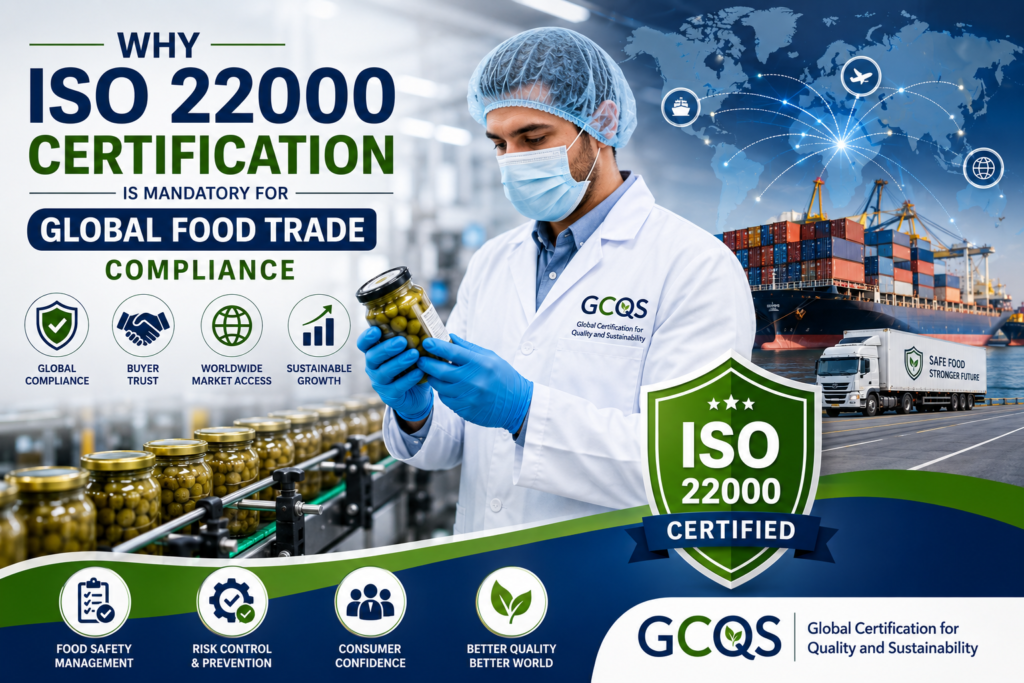
Today, with the increasing connectivity in the food industry, firms are no longer bound by their geographical boundaries. Many firms, like manufacturers, exporters, processors, packers, and distributors, are increasingly becoming active players in the international market. However, getting into international markets is subject to following international food safety standards. ISO 22000 Certification for Global Food Trade comes as a solution for such requirements.
ISO 22000 represents international standards that assist organisations in identifying and controlling food safety hazards in the food supply chain. Therefore, if your firm wants to venture into global business, obtaining an ISO 22000 Certificate in India has become crucial.
1. Understanding ISO 22000 Certification
ISO 22000 is an internationally approved food safety management system that has been developed by the International Organisation for Standardisation (ISO). This Food Safety Management System includes both the concepts of HACCP and risk management within itself.
The ISO 22000 certification is applied to all the companies involved in the food chain processes as follows:
- Production of foods
- Processing of foods
- Packing of foods
- Storing of foods
- Catering services
- Transportation of foods
- Retail of foods
- Import/export of foods
The ISO 22000 food safety certificate in India signifies the dedication of the companies towards producing high-quality food products.
2. Why Food Safety Compliance Matters in Global Trade
The issue of food safety is now becoming a serious problem for many governments, regulatory agencies, and the consumer base around the world. Contamination problems will lead to food recalls, financial costs, fines, and ultimately harm a company’s brand image.
Foreign buyers always insist on certification of the food safety standard before any business agreement between them. The ISO 22000 helps in this regard as it offers an internationally accepted food safety management system.
Lack of such a certificate may lead to:
- Export limitations
- Delayed delivery
- Excess inspection
- Loss of international business
Such a certification becomes very important for any organisation planning to grow in international markets.
3. Key Benefits of ISO 22000 Certification for Global Food Trade
3.1. Facilitates International Market Access
Many nations and multinationals have a preference for working with food suppliers who have been granted internationally recognised food safety certifications.
The ISO 22000 Certification in India allows firms to satisfy the demands of their foreign clientele and ease the process of international marketing by meeting internationally acknowledged food safety norms.
3.2. Boosts Consumer Trust
In today’s world, consumers tend to be well-informed about food safety and quality standards. It ensures that the food being sold is produced in a safe environment.
It makes customers more confident in the business’s products and enhances its reputation within and outside the country.
3.3. Eliminates Food Safety Hazards
The ISO 22000 certification aims to identify and mitigate food safety risks throughout the production process.
Some benefits that organizations gain from using the system include the following:
- Less contamination risk
- Better controls
- Less recalls
- Higher consistency
These improvements contribute to safer food products and greater business reliability.
3.4. Improves Regulatory Compliance
The food laws differ from nation to nation; however, most nations have strict standards on food safety practices. The standard complies with many requirements and guidelines set by various regulatory bodies.
This helps minimise legal issues and ensures the effective operation of international business operations.
4. Improves Supply Chain Coordination
Food safety is not only relevant to the production process but each phase in the supply chain process. ISO 22000 ensures proper communication and coordination between suppliers, manufacturers, and other parties involved in the process.
5. Why ISO 22000 is Becoming Mandatory for Export-Oriented Businesses
The modern global food industry revolves around the principles of quality and risk management. Food safety certification is increasingly becoming a compulsory requirement among many foreign buyers, food chains, and importers.
Organisations that do not possess certification may have difficulty finding export orders or sustaining their business relationships abroad.
ISO 22000 food safety certification in India allows an organisation to:
- Meet buyer requirements
- Facilitate exports
- Establish competitiveness
- Demonstrate a commitment to food safety excellence
Given the constantly evolving global regulatory framework, organisations with certification are better positioned for change management.
6. The Role of GCQS in ISO 22000 Certification
Certification is an endeavour that needs expertise, documentation, risk assessment, implementation, auditing, and certification readiness assessment.
The GCQS Global Certification for Quality and Sustainability helps companies achieve their certification goals by facilitating the creation of good food safety management systems based on ISO 22000 requirements.
Through professional help provided by Global Certification for Quality and Sustainability (GCQS), companies will find it easier to pursue their certification goals.
7. Industries That Can Benefit from ISO 22000 Certification
The certificate is beneficial for several different sectors associated with the food industry like:
- Food Manufacturing Companies
- Beverages Manufacturers
- Dairy Products Plants
- Fish and Meat Processing Units
- Agriculture Product Exporters
- Food Packaging Companies
- Restaurants/Catering Services
- Logistics and Cold Storage Providers
No matter what the size of the organisation may be, ISO 22000 would prove to be immensely useful for any food-based operation.
8. Conclusion
In today’s age of the food business industry, food safety has become an essential aspect, owing to the rise in competition. Certification of ISO 22000 for international food trade would benefit those organisations that wish to make their mark on the international stage through certification of food safety systems.
ISO 22000 Certification in India would be a wise choice for companies that want to venture into the international market arena. By selecting Global Certification for Quality & Sustainability (GCQS) as your partner for ISO 22000 Certification, you would have made your way towards sustainable success.