How HACCP Certification Helps Food Businesses Reduce Compliance Risks
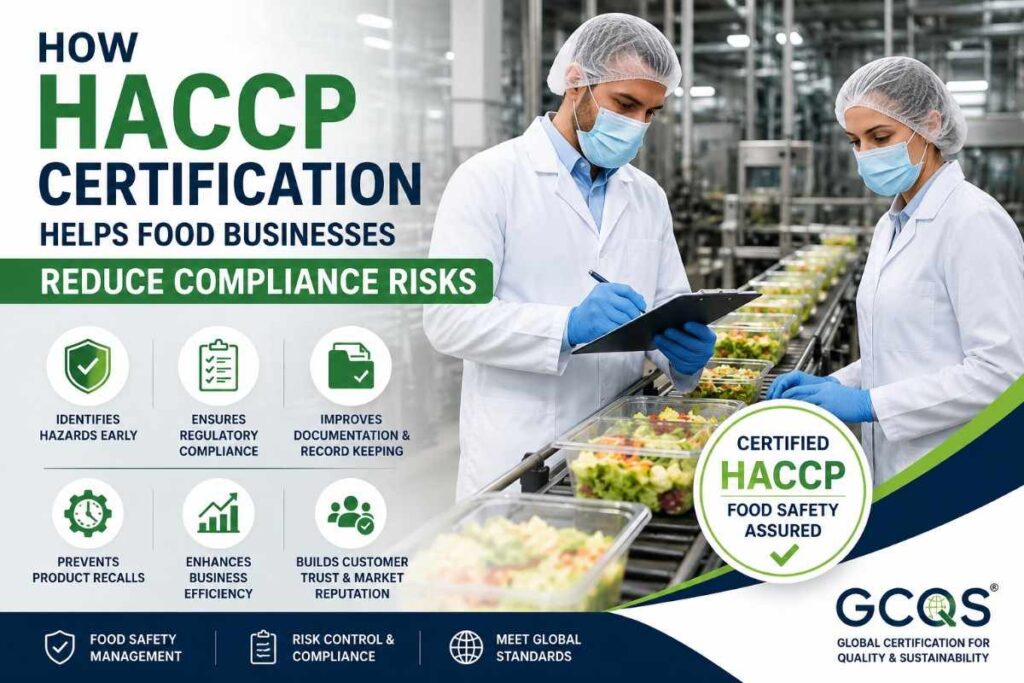
Given that the food business is characterised by numerous regulatory requirements, it is important to ensure that there is no threat to the safety and quality of food items offered. The above point refers to food producers, food processors, restaurants, exporters, and packers that have to comply with strict requirements and protect both the consumers and themselves from any negative consequences. One of the most effective ways to do that is through obtaining HACCP certification in India.
Through the use of HACCP standards, it is possible to control all sorts of risks related to food production. The use of the above standard will not only ensure compliance but also make processes more efficient. Meanwhile, the Global Certification for Quality and Sustainability (GCQS) provides a range of services and support in terms of HACCP compliance.
What Is HACCP Certification?
HACCP stands for Hazard Analysis Critical Control Points, which is a globally accepted methodology to address biological, chemical, and physical hazards in food production.
Certification in HACCP implies that the organisation has effective control mechanisms for managing food safety issues, following an organised approach in assessing and handling such risks.
HACCP certification is well accepted in regulatory bodies, retail companies, and internationally. Through the use of HACCP, food organisations can actively address food safety issues rather than addressing them reactively.
Understanding Compliance Risks in the Food Industry
There are several compliance issues faced by food businesses, such as:
- Food contamination
- Regulatory violations
- Product recalls
- Inadequate documentation
- Hygiene problems
- Security concerns with the supply chain
- Export regulations non-compliance
The failure to manage the above-mentioned risks may lead to several consequences, like fines, lawsuits, tarnished reputation, and monetary losses. For this reason, it makes sense for many firms to consult HACCP certification consultants in India.
How HACCP Certification Reduces Compliance Risks
1. Identifies Food Safety Hazards Early
A basic principle of HACCP is hazard analysis. Organisations conduct systematic analyses of possible food safety hazards at each production level.
Conducting such analyses will enable organisations to:
- Avoid contamination
- Lower the risks of foodborne illnesses
- Ensure quality products
- Abide by food safety guidelines
Early identification of food safety risks makes it less likely for organisations to be involved in compliance issues.
2. Identifies Critical Control Points
Critical Control Points (CCP) must be identified in accordance with HACCP so that risks are minimised, avoided, and controlled.
Some critical control points include:
- Monitoring temperatures when storing
- Cooking and pasteurizing measures
- Inspection of packaging process
- Sanitation procedures
3. Improves Regulatory Compliance
The pressure on food companies is increasing to show that they have structured food safety management systems in place.
Obtaining HACCP certification for businesses operating in India will assist the business to be in line with:
- The requirements of the FSSAI
- International food safety standards
- Export requirements
- Customer requirements
This will make the process of inspections by the regulatory authorities easier.
4. Improves Documentation and Recordkeeping
Inadequate record keeping is one of the most common reasons for non-compliance in food businesses.
The HACCP system will necessitate:
- Records of process monitoring
- Records of corrective action taken
- Verification procedures
- Training records of staff
- Records of equipment maintenance.
Proper documentation improves traceability and demonstrates compliance during audits and inspections.
Supports Food Safety Management System Certification
Many companies aim to obtain HACCP as part of their food safety management systems certification program.
Implementation of an effective HACCP system makes it easier to integrate with various international food safety standards, including:
- ISO 22000
- FSSC 22000
- GMP
Quality management systems of the food industry
Improves Compliance Management and Performance
More customers, retailers, and international importers are becoming more interested in certified food safety providers.
For food companies, HACCP certification gives a guarantee that foods are produced in a safe environment.
Advantages of obtaining this certification include:
- Building customer trust
- Expanding markets
- Increasing suppliers’ credibility
- Boosting exporting activities
Many purchasing departments consider HACCP certification as one of the primary requirements when sourcing food products.
Reduces Product Recall Risks
The cost of a product recall can be devastating for the reputation of a food company.
With the effective hazard controls and monitoring provided by HACCP, companies are able to:
- Identify issues early
- Prevent dangerous products from being distributed to consumers
- Lower the number of recalls
- Save money
Risk reduction is considered one of the most important benefits of the HACCP program.
Why Use HACCP Certification Consultants?
Compliance with HACCP requirements is complicated, especially when you are new to the world of food safety.
Working with professional HACCP certification consultants can help your business to:
- Perform gap analysis
- Develop HACCP plan
- Identify CCPs
- Set up documentation system
- Train staff
- Pass certification audits
Professional guidance helps reduce implementation errors and accelerates certification success.
Choosing the Right HACCP Certification Company in India
Choosing a reputable HACCP certification company India will help you achieve success with the certification process.
Some things to keep in mind while choosing your certification partner include:
- Industrial experience
- Technical knowledge
- Qualification of the auditor
- Client support services
- International recognition
- Track record
Partnering with experienced HACCP certification consultants in India guarantees that your food safety management system certification will be in compliance with industry regulations.
Conclusion
With food safety laws and regulations becoming increasingly complex, food businesses need to adopt proactive approaches to minimise compliance risks and ensure safety for consumers. HACCP certification in India enables you to develop an internationally recognised food safety management system framework.
Whether it helps improve documentation, prevents contamination, reduces product recalls or increases customer satisfaction and trust, HACCP certification for food businesses brings numerous benefits. With GCQS’s help, you will be able to set up a solid framework for food safety and increase the competitiveness of your business.