How to get ISO 22000 Certification for Food Safety Management
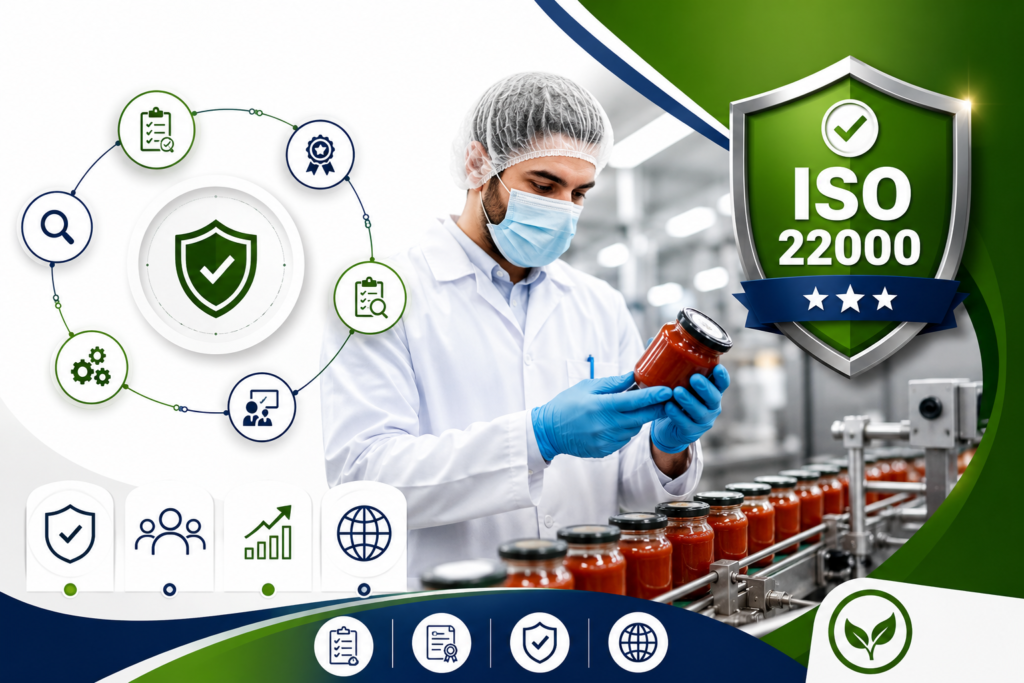
Food safety is currently becoming an important factor in the food industry since consumers demand safe and healthy food products, and there is a necessity for regulatory authorities to implement the standards that regulate food safety issues. Thus, the ISO 22000 food safety certification in India plays an important role in this context.
ISO 22000 is a globally recognised FSMS standard that allows food product manufacturing businesses to prevent any potential risks associated with food safety, including risk identification, management, and reduction. Being the owner of a food product manufacturing firm, restaurant, catering company, packing plant, or food processing company, it is useful for you to gain ISO 22000 certification because it can bring you many benefits.
The following article provides information about how to get ISO 22000 certification. Meanwhile, you will learn why Global Certification for Quality and Sustainability (GCQS) is worth your attention.
1. What is ISO 22000 Certification?
ISO 22000 refers to an internationally recognised standard on food safety management put together by the ISO. The food safety management approach combines principles of food safety, HACCP, and management processes.
ISO 22000 guarantees that the company has the ability to supply safe food products that meet consumer and legal expectations.
ISO 22000 applies to all firms operating within the food chain, including:
- Food manufacturing firms
- Food packaging firms
- Hotels and restaurants
- Firms involved in cold storage
- Catering firms
- Firms involved in the dairy and beverage industry
- Farming organizations
- Transport firms
2. Importance of ISO 22000 Food Safety Certification in India
Given the rising concern over food hygiene and quality, many firms in India have begun to use ISO standards rapidly. The ISO 22000 food safety certification in India comes with a number of benefits for food businesses.
2.1 Enhanced Food Safety
ISO 22000 assists organisations in identifying food risks and taking precautionary actions to ensure the safety of food throughout its lifecycle.
2.2 Customer Satisfaction
Customers tend to place their trust in food business firms that adhere to international food safety standards.
2.3 Regulatory Compliance
The certification ensures the compliance of businesses with Indian food safety laws and FSSAI guidelines.
2.4 Increased Opportunities
It gives organisations more opportunities to deal with food retailers, exporters, and foreign purchasers.
2.5 Improved Business Image
Obtaining ISO certification is an indicator of the organisation’s commitment towards quality and food safety.
3. Steps to Get ISO 22000 Certification
Certification under ISO 22000 entails the undertaking of several processes. They include the following:
3.1. Understanding the Requirements of ISO 22000
Understanding the requirements of ISO 22000 is the first step. Businesses need to assess their food safety management practices and highlight any weaknesses that exist.
Some of the key areas include:
- Food safety policy
- Hazard analysis
- Risk management
- Operational control
- Documentation process
- Employee hygiene and training
Consulting experts like Global Certification for Quality and Sustainability (GCQS) will assist organizations in understanding ISO 22000 requirements.
3.2. Conducting Gap Analysis
Gap analysis entails assessing the difference between the company’s current food safety management practices and those stipulated by ISO 22000.
Gap analysis highlights such issues as:
- Weaknesses in the current practices
- Procedures lacking in the current process
- Improvements required
- Compliance risk
Gap analysis provides the basis of an effective food safety management system implementation.
3.3. Develop and Implement Food Safety Management System
Having done the above, the next phase involves implementing the Food Safety Management System (FSMS) according to the ISO 22000 standard.
The above process entails:
- Developing food safety policies
- Setting up HACCP plans
- Defining operational procedures
- Preparing necessary documentation
- Setting quality objectives
- Employee training and awareness
The FSMS needs to encompass all operational activities involved in food safety.
3.4. Employee Training and Awareness
Employees form one of the most vital links for maintaining food safety standards. Training helps ensure employees are aware of hygienic practices, safety measures, and operational procedures.
Such training should cover:
- Proper handling of food
- Sanitization practices
- Hazard identification
- Emergency response procedures
- Documentation procedures
3.5. Internal Audit
Prior to the certification audit, there should be an internal audit to determine the effectiveness of the system.
An internal audit will help in:
- Detecting non-conformances
- Addressing any operational problems
- Preparation for compliance
- Improving efficiency
This is crucial to achieve certification.
3.6. Certification Audit
This consists of two audits carried out by the certifying body:
1st Stage Audit
The auditor will assess the documents, policies, and preparedness of the system.
2nd Stage Audit
The auditor will check how well these are implemented in the organisation.
If all these are satisfied, the organisation receives ISO 22000 certification.
4.Why Choose Global Certification for Quality and Sustainability (GCQS)?
Selecting the ideal certification partner is an essential element in a successful certification process. One of the most reputable certification partners you can choose to attain ISO certification is Global Certification for Quality and Sustainability (GCQS).
Reasons to Choose Global Certification for Quality and Sustainability (GCQS)
- Certification professionals with experience
- Guidance tailored to specific industry
- Transparency throughout the certification process
- Affordable solutions
- Quick audit services
- Help with documentation and compliance issues
Global Certification for Quality and Sustainability (GCQS)enables your company to have a smoother certification process while maintaining international standards of certification.
5. Industries That Require ISO 22000 Certification
Several industries that require ISO 22000 certification include:
- Food manufacturing factories
- Restaurants and cafes
- Hotel and resorts
- Dairy manufacturing factories
- Bakery industries
- Beverage manufacturing industries
- Food exporting firms
- Agriculture processing plants
Large and small firms that deal with food can greatly benefit from having a food safety management system.
6. Conclusion
It’s not only about meeting the regulations but also about doing your business responsibly. Having an ISO 22000 food safety certificate in India can help you keep your level of safety intact, increase efficiency and win the trust of your customers.
All the processes, starting from food safety hazard identification and going all the way to prevention, are included in the ISO 22000 food safety certificate. If you decide to cooperate with Global Certification for Quality and Sustainability (GCQS), we guarantee that your road to getting a food safety certification will be smooth.
In case your goal is to improve the level of food safety and build a credible name in the food industry, this is what you need to do.