FSMA Rule 204 Explained: What Food Exporters Need to Know
Regulations in the international food sector are tightening, and any business that exports food products into the U.S. is required to adhere to stringent standards in terms of food safety and traceability. One of the important regulatory standards that has been issued by the FDA is FSMA Rule 204. This regulation aims to increase food traceability so that cases of foodborne diseases can be minimized.
Exporters must understand what FSMA 204 is all about because it will help them continue to trade their products in the U.S. market. As an importer, exporter, distributor, or manufacturer of food products, you have no option but to comply with this regulation. Seeking help from an FSMS consultant such as Global Certification for Quality and Sustainability will make things easier for you.
What is FSMA Rule 204?
The FSMA Rule 204 is one of the rules under the Food Safety Modernization Act (FSMA) proposed by the FDA. Known officially as the Food Traceability Final Rule, this mandate calls on companies processing specified high-risk foods to keep records throughout their supply chain.
The main reason why this rule was passed was to enhance food traceability so that the FDA can pinpoint the contamination source easily in cases of food safety problems. This increases the speed of the recall process; hence, minimizing the risks of health problems among consumers as well as minimizing financial loss to businesses.
Importance of FSMA Rule 204 for Food Exporters
Should your company sell food items in the U.S., then you need to prioritize food exporter compliance. Not complying with FSMA Rule 204 will lead to your goods being delayed, recalled, or refused entry into the country.
Some of the advantages of complying with this regulation include:
- Enhanced supply chain transparency
- Fast product traceability
- Minimized recall costs
- Customer satisfaction
- Compliance with international food safety standards
- Ease of market entry into the U.S.
For exporters, documentation has now become just as important as the quality of the goods themselves.
Which Food Products are Covered?
The FSMA Rule 204 primarily covers foods that have been placed on the FTL of the FDA. They include the following groups of foods, which are considered to be risky and cause foodborne illnesses, such as:
- Fresh produce
- Leafy greens
- Tomatoes
- Fresh herbs
- Nut butters
- Soft cheeses
- Seafood
- Shell eggs
- Ready-to-eat deli salads
When exporting these foods, businesses should keep in mind that they need to have full traceability data from the moment of production till distribution.
Key Components of FSMA 204 Compliance
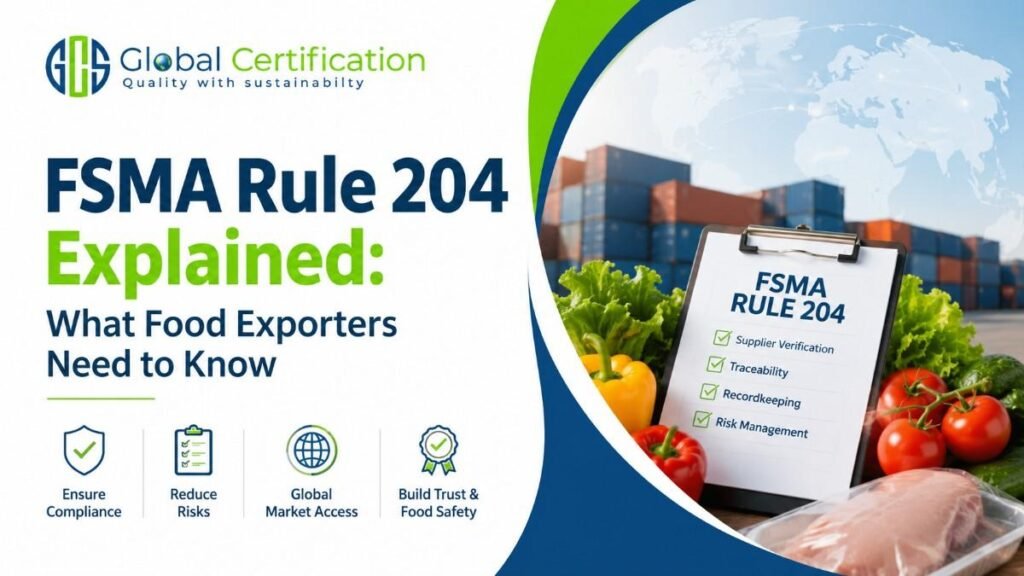
Compliance with FSMA 204 starts with understanding the requirements regarding recordkeeping. Businesses need to collect and store Key Data Elements (KDEs) for each Critical Tracking Event (CTE).
They usually include:
- Product Identification: All food products need to be labelled by their batch/lot number to allow full traceability.
- Source Data: Exporters should know where the ingredients or products originated from.
- Processing Information: Firms should keep records concerning all processing, packing, transformation, and manufacturing processes.
- Shipping Information: Businesses need to provide shipping date, destination information, and shipping records.
- Receiving Information: It is essential to document every incoming shipment from suppliers.
Digital recordkeeping will help firms to facilitate their compliance.
Challenges Faced by Food Exporters
It is hard for most of these businesses to comply with the FDA regulations due to lack of traceability in the systems already in place. Such problems include:
- Manually kept records
- Incompleteness of supplier information
- Poor record keeping
- Inadequate traceability systems
- Low employee awareness
- Difficulty with integration of supply chain partners
These problems increase the chances of failing compliance and operational delays.
The Role of FSMS Consultants
FSMS Consultants play a key role in helping food companies implement the FDA regulations efficiently.
An FSMA Consultant in India can help with:
- Compliance assessment
- Traceability system development
- Documentation
- Employee training
- Internal audit
- FSMS improvement
- FDA compliance assessment
Their skills enable food companies to develop an effective compliance system without hampering day-to-day activities.
Importance of FDA Compliance for Exporters
FDA compliance for exporters involves much more than just adhering to legal requirements. This also shows the exporter’s commitment to ensuring the safety, quality, and protection of consumers of their products.
Exporters with effective compliance systems are likely to have:
- More trust from overseas buyers
- Lower regulatory risk
- More chances of exporting products
- Good supplier relations
- Efficient operations
As food safety laws and regulations keep changing, businesses that have effective compliance programs will be more competitive.
Why Choose Global Certification for Quality and Sustainability?
It may be difficult for companies to comply with the FSMA Rule 204, but it is made easy with the guidance of experts. Global Certification for Quality and Sustainability offers professional consultation that will help food manufacturing companies and exporters to achieve success in their efforts towards compliance.
Their expert FSMS consultants assist companies in developing appropriate strategies for compliance, improving their food safety management systems, and meeting the FDA requirements in every aspect of the process, from documentation and traceability to auditing and employee training.
No matter what you are exporting—fresh fruits or vegetables, processed foods, seafood, or packaged foods—you need a trusted FSMA Consultant in India.
Conclusion
Rule 204 of the FSMA stands out as an important step towards food traceability and transparency within the food supply chain. For companies supplying food products to the United States, compliance with FSMA 204 is vital for continued success and unfettered access to the market.
Compliance with regulations through maintenance of records on food traceability and improvement of internal business processes not only decreases regulatory risks but also increases consumer trust in the business. Engaging the professional services of FSMS consulting firms such as Global Certification for Quality and Sustainability will help exporters comply with the regulations efficiently.