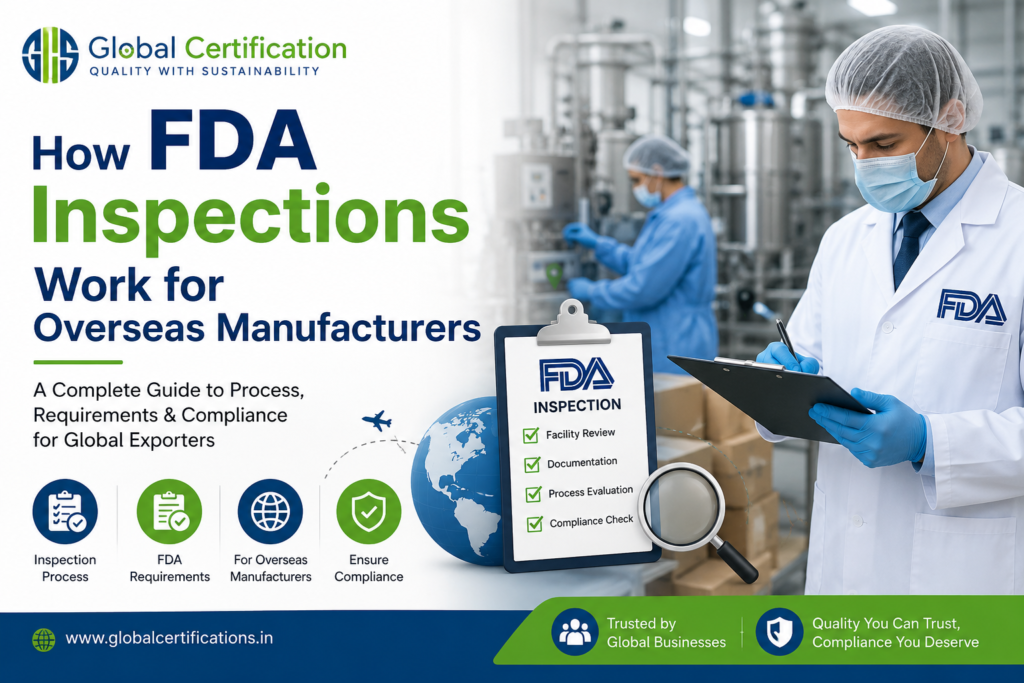
How FDA Inspections Work for Overseas Manufacturers
The entry into the U.S. market provides good possibilities for growth for manufacturers from different sectors like the food industry, pharmaceutical industry, medical devices manufacturing, cosmetology, and dietary supplement manufacturing. But before exporting their products to the U.S., manufacturers should meet the requirements set by the U.S. Food and Drug Administration (FDA). Knowledge of the FDA inspection process for foreign manufacturers is crucial for those companies that want to have access to the market.
This guide will help you understand the US FDA inspection process and be well-prepared for an inspection.
Why FDA Inspections Are Important
FDA inspections are conducted to ensure that imported products are safe and effective and have been produced under regulations that are applicable. These inspections are used to confirm that manufacturing companies abroad adhere to Good Manufacturing Practice (GMP), have quality systems, and have adhered to all the regulations set by the U.S. government.
Companies that have passed the FDA inspection have more assurance from importers, distributors, and consumers, and avoid shipping problems, recalls, and rejection of imports.
What Is the US FDA Inspection Process?
The FDA inspection process is an evaluation of the manufacturing facility to check its compliance with the FDA regulations. It could either be planned or unannounced based on the industry.
Some of the key components of an FDA inspection include:
1. Planning for the Inspection
The FDA decides upon facilities to be inspected based on the type of product, compliance, risk factors, and if the product is exported to the U.S. Manufacturers who export products to the U.S. can also be subject to FDA inspections.
2. Opening Meeting
FDA inspectors identify themselves, give their purpose for the visit, and then talk about the objectives of the inspection.
3. Evaluation of the Facility
Inspectors will evaluate different aspects of the facility, such as:
- Production
- Equipment maintenance
- Hygiene
- Training of employees
- Management systems
- Raw materials
- Traceability
- Record keeping
This is done to ensure that the products are consistently manufactured in compliance with FDA regulations.
4. Documentation Review
An essential element of the process during the inspection is the documentation review by the inspectors. They may ask for:
- Standard Operating Procedures (SOPs)
- Manufacturing batch records
- Validation documents
- Calibration documents
- Procedure for handling complaints
- Corrective and Preventive Actions (CAPA)
- Internal audit reports
Well documented information shows that the company is following the regulations.
5. Conclusion Meeting
After completing the inspection, FDA inspectors present their findings at the conclusion meeting. Any deficiencies found will be corrected by the company as soon as possible.
Common Areas Evaluated During FDA Inspections
During FDA inspections of foreign manufacturers, inspectors usually concentrate on the following aspects:
- Good Manufacturing Practices (GMP)
- Quality Control measures
- Safety of the product
- Validation of equipment
- Testing in the laboratory
- Employee training
- Risk management
- Cleaning and sanitization
- Change control processes
- Records management
Effective internal controls greatly increase chances of passing FDA inspections successfully.
How to Get Ready for FDA Inspections
FDA inspection readiness is the most important factor for FDA export compliance. The manufacturer needs to have effective quality systems well before any inspection takes place.
Some effective practices may include the following:
- Internal auditing
- Well-maintained and updated documentation
- Training of employees on FDA regulations
- Validation of production processes
- Equipment calibration reports
- Supplier quality control
- Regular review of corrective action
- Traceability of products
Being inspection-ready at all times reduces compliance risks and improves operational efficiency.
Importance of FDA Compliance Consultants
Several companies rely on professional FDA compliance consulting firms in India to be prepared for FDA inspections and enhance regulatory compliance systems.
FDA compliance consultants in India can assist companies:
- To understand FDA regulations
- Gap Assessment
- Improvement of documentation processes
- Creation of quality management system
- Mock FDA inspections
- Training
- Creation of Corrective Actions Plan
- Export Compliance Program Improvement
Professional consulting will allow organisations to avoid expensive FDA compliance errors and become well-prepared for inspections.
US FDA Certification in India: Competitive Advantage
Though FDA certification does not exist, businesses may try to comply with FDA regulations and register their facilities (when required). The US FDA Certification in India or FDA registration in India is an approach that allows enhancing the competitiveness of your company in international markets.
The main advantages of FDA-compliant manufacturers are:
- Increase in export prospects
- Improved confidence among customers
- Improved acceptability by U.S. importers
- Improved quality of products
- Decreased risks
- Improved reputation in the international market
FDA export compliance is beneficial for business development and cooperation with foreign business partners.
Why Choose Global Certification for Quality and Sustainability?
It involves technical competence, regulatory understanding, and compliance. Global Certification for Quality and Sustainability offers its clients complete FDA compliance services to make sure they comply with the regulatory requirements.
It includes documentation reviews, compliance assessments, FDA training services, and inspection preparedness for manufacturers. Regardless of the situation, whether it is about making entry into the U.S. market or strengthening the compliance process in a company, experienced consultants will help to manage every stage easily.
Conclusion
FDA inspections for overseas manufacturers are important for those who want to have success in U.S. market entry. The US FDA inspection process includes the examination of manufacturing processes, documentation, product quality, and compliance with FDA requirements in order to guarantee the safety of consumers.
Partnering with an FDA compliance consultant in India or FDA compliance consultants in India will allow preparing properly, strengthen FDA export compliance, and ensure compliance with FDA requirements in order to get the US FDA certification in India successfully.