Why Small Food Businesses Should Get HACCP Before Exporting
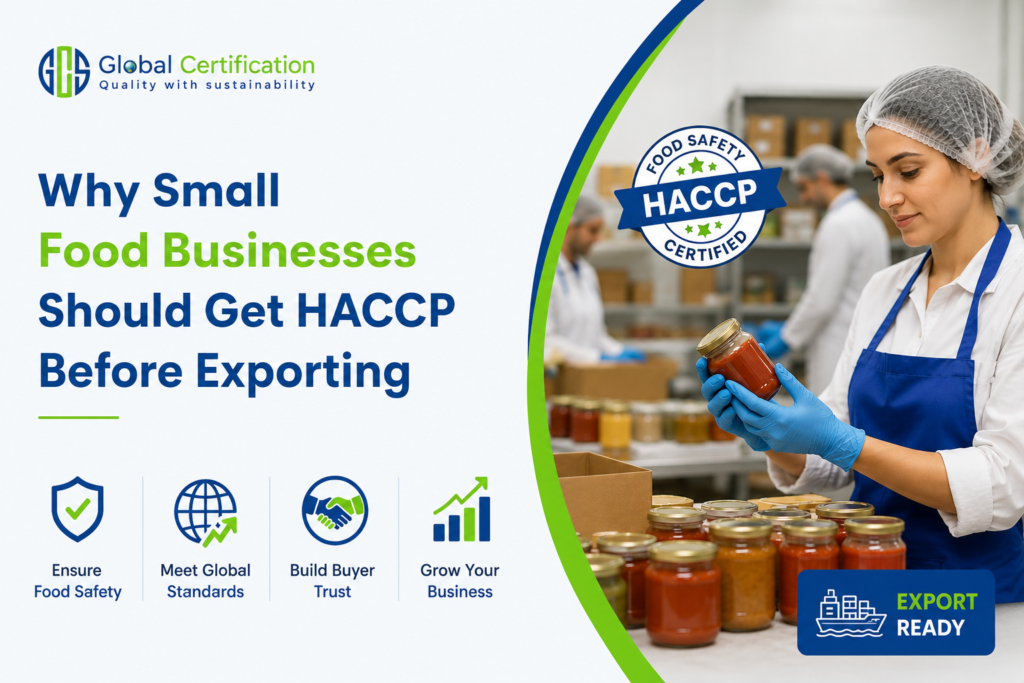
Venturing into international markets is one of the biggest achievements of any food company. But exporting food items is not as simple as just getting foreign customers. The expectations of international customers are quite high when it comes to quality, safe production methods, and adherence to global food safety standards. That is why HACCP certification of food exporters has become a necessity rather than a luxury.
Food companies that operate on a small scale will benefit greatly from obtaining HACCP certification in India. They will be able to enhance their reputation and enter new global markets without worrying about food safety issues. A HACCP certification consultant will make the process easier.
What is HACCP Certification?
HACCP stands for Hazard Analysis and Critical Control Points; this is an international food safety management tool that helps in identifying, evaluating, and controlling food safety risks during production.
Whereas traditional food safety systems try to address contamination issues after they happen, HACCP tries to prevent food hazards from happening before food products can be delivered to consumers.
Because of its preventative nature, HACCP has become one of the most reliable systems in the global food industry.
For firms wanting to venture into international markets, food export certification using HACCP will show dedication to manufacturing quality food products.
Why HACCP Matters for Small Food Businesses
A lot of food businesses think that there is no need to use HACCP in small companies. On the contrary, international customers tend to give preference to suppliers, regardless of their size, that comply with food safety requirements.
Introduction of HACCP in small food businesses allows developing proper production procedures and building a good reputation among customers.
The main benefits of introducing HACCP in small businesses are:
- More efficient food safety management
- Minimisation of production risks
- Building customer trust
- Facilitating export procedures
- Higher operational efficiency
- Market competitiveness
These benefits allow small businesses to compete with large food manufacturers worldwide.
HACCP Certification Makes Exporting Easier
Several nations mandate that suppliers fulfil internationally recognised food safety standards prior to importing any food products from them. In the absence of food safety certification for exporters, there will be chances of delays in exports, rejection of consignments, or limited markets.
By obtaining HACCP certification for food exporters, your export procedure becomes easier because the certificate will assure your buyers that you follow internationally recognised food safety practices.
HACCP certification for food exporters is particularly useful for exporting:
- Processed Foods
- Spices
- Dairy Products
- Seafood
- Frozen Foods
- Bakery Products
- Ready-To-Eat Food
- Fresh Fruits & Vegetables
Satisfying buyer expectations before sending out the products will aid in building up international business relations for long term.
Build Buyer Trust and Improve Brand Image
Before finalizing the contract, buyers from the international market assess their supplier companies well.
Companies with HACCP certification in India have a good chance at getting an edge over others due to:
- Food safety standards commitment
- Production system reliability
- Product quality consistency
- Minimal chances of contamination
- Conformity with internationally recognised food safety requirements
As trust increases, businesses are more likely to receive repeat orders and long-term supply agreements.
Reduce Food Safety Risks
Contaminated foods may lead to costly recalls, harm to reputation, and financial losses. HACCP will assist firms in detecting potential risks in the entire process of production and controlling those risks.
- Some examples of hazards include the following:
- Biological hazards
- Chemical hazards
- Physical hazards
- Cross-contamination in the process of manufacturing
- Improper storage conditions
- Temperature control risks
Firms that monitor critical control points will be able to mitigate all of the mentioned risks and ensure product consistency.
Access to International Markets
Exporting food products to many countries located in Europe, the Middle East, Asia, and North America involves compliance with international food safety management systems.
Certification of the exported food will help small firms to better satisfy customer needs and participate in the international market.
Also, many international retailers, distributors, and importers prefer working with certified suppliers.
Why Work with an HACCP Certification Consultant?
Though there are many advantages of HACCP, the successful implementation of the HACCP program needs thorough planning and documentation.
The professional HACCP Certification Consultant assists the organization in doing:
- Hazard Analysis
- Documentation Preparation
- Preparation of HACCP Plan
- Employee Training
- Identification of Critical Control Points
- Preparation for HACCP certification audit
- Continuous Compliance
Professional assistance can help save implementation time and also prevent certification mistakes.
Growing Demand for HACCP Certification in India
India has emerged as one of the leading food exporting nations in the world, providing spices, processed foods, seafood, cereals, dairy products, and packaged foods to the international market.
With increasing international demands, organizations are opting for HACCP certification in India.
For those companies that are beginning exports or want to enter new international markets, HACCP certification serves as a great platform for sustainable business growth.
Partner with Global Certification for Quality and Sustainability
Selecting the correct certification partner is just as crucial as getting the certification itself. The organisation offers its assistance in the whole HACCP certification process to food producers, processors, exporters, and small companies.
Starting from assessment and documentation, through implementation and certification assistance, the company provides all the necessary information and professional help in order to comply with international food safety standards.
The advice will allow companies to successfully meet the export requirements and improve food safety procedures.
Conclusion
Food exports have a lot of potential in the business arena; however, the success in this field largely relies on the international food safety standards. The importance of HACCP certification for food exporters cannot be understated, as it increases compliance and builds trust.
If you are a new or experienced food exporter, getting HACCP for small food businesses would definitely become a key to your success. Getting food safety certification for exporters through the services of an experienced HACCP certification consultant will allow businesses to confidently enter foreign markets and establish a good relationship with their international customers.
When it comes to expanding your food business globally, our company, Global Certification for Quality and Sustainability, will be glad to provide you with reliable HACCP certification.