What Is GMP Certification? A Complete Guide for Manufacturers
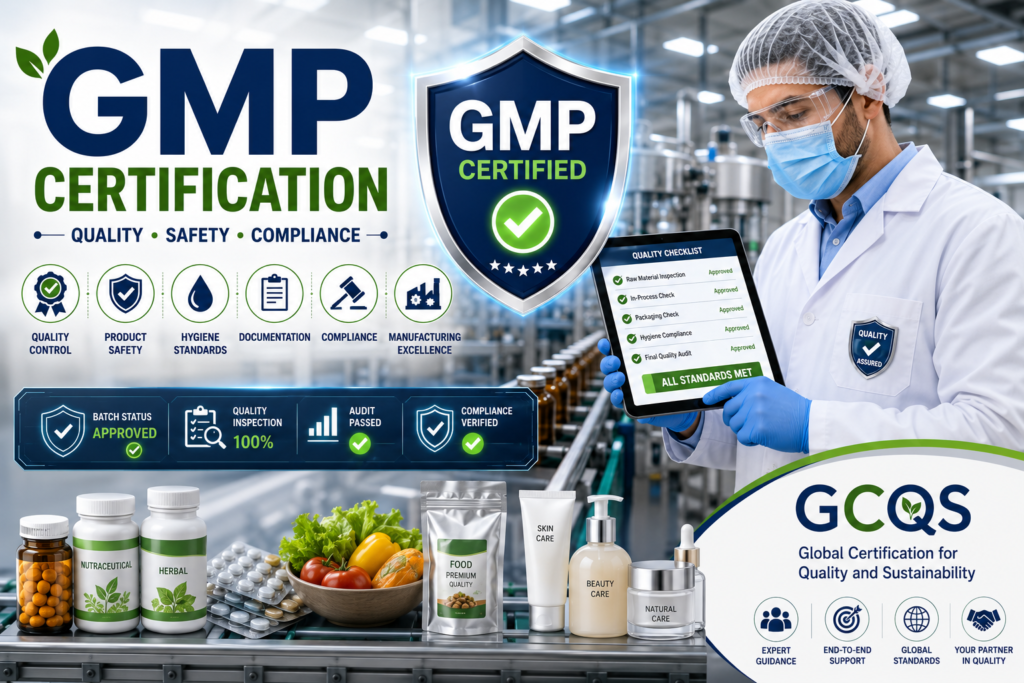
Quality, safety, and consistency are important elements that are required by manufacturers in the competitive business atmosphere. Whatever industry you belong to, whether it is pharmaceuticals, food processing, cosmetics, healthcare products, or nutraceuticals, it is crucial to keep up with manufacturing standards. GMP Certification becomes an important element here.
The knowledge of the GMP Certification process could be advantageous to businesses since it helps them improve product quality, gain more customers’ confidence, and ensure compliance with regulations. In this guide, we will discuss everything you need to know regarding GMP Certification in India, the advantages of getting this certification, and GMP Certification Consultancy Services.
1. What Is GMP Certification?
GMP means Good Manufacturing Practices. It refers to a set of practices used to produce and control goods in compliance with predefined quality requirements.
Certification to GMP indicates that a manufacturer complies with a certain set of guidelines regarding:
- Manufacturing operations
- Systems of quality control
- Cleanliness and training of staff
- Maintenance of equipment
- Documenting and recording procedures
- Facilities’ cleanliness and safety
The main purpose of the GMP policy is risk reduction in manufacturing which cannot be achieved through testing.
2. Why Is GMP Certification Important?
Product recalls, consumer complaints, legal problems, and damage to the company’s reputation are some of the consequences that may result from manufacturing defects. GMP certification is an effective way of avoiding such negative outcomes since it standardises the manufacturing process.
The following are some of the benefits that manufacturers derive from getting GMP certified:
2.1 Higher Product Quality
Manufacturing guidelines according to GMP ensure quality controls throughout the manufacturing process.
2.2 High Level of Consumer Satisfaction
Customers and other stakeholders tend to have greater confidence in GMP-certified manufacturers.
2.3 Industry Requirements
Several manufacturing sectors require GMP certification to meet regulatory requirements.
2.4 Access to New Markets
GMP certification helps firms gain market access as well as contracts with major distributors.
2.5 Lower Operational Risk
Standardisation reduces the risk of errors, contamination, and manufacturing defects.
3. Who Needs GMP Certification?
GMP certification of manufacturers can prove advantageous in various industries such as:
- Manufacturers of pharmaceutical products
- Manufacturers of foods and beverages
- Producers of dietary supplements
- Manufacturers of cosmetic products
- Medical devices manufacturers
- Manufacturers of herbal and ayurvedic products
- Manufacturers of nutraceutical products
GMP certification is applicable to all businesses whose products influence consumer health and safety.
4. GMP Certification in India
In India, there has been an increasing need for GMP certification owing to the efforts made by businesses to achieve quality standards on the local and international fronts.
For Indian manufacturers seeking globalisation, obtaining GMP certification is an effective way of demonstrating their quality management systems and compliance with regulations. The Indian pharmaceutical, food processing, cosmetic, and medical care industries are some that have adopted GMP practices.
5. Understanding the GMP Certification Process
The steps involved in GMP certification include:
5.1. Gap Analysis
Current practices of the organization will be evaluated to find out how much these deviate from GMP standards.
5.2. Document Review
Policies, procedures, working documents, quality manuals, and operational files will be analyzed.
5.3. Implementing GMP Standards
Changes will be effected to bring about conformity with production systems, hygiene methods, quality control, and training.
5.4. Internal Audit
Conducting an internal audit is aimed at establishing the state of preparedness for certification.
5.5. Certification Audit
The site and all its operations will be audited independently to establish its conformity.
5.6. Certification Approval
Upon compliance with all the requirements, the GMP certificate will be issued.
5.7. Surveillance
This involves conducting regular audits to ensure conformity.
6. Benefits of Working with a GMP Certification Consultancy
Manufacturers often opt to consult a GMP Certification Consultancy to make their certification process easier and enhance their chances of success.
Some areas where a consultancy firm may be useful include:
- Gap analysis and readiness assessment
- Documentation development
- Training programs
- Process improvements
- Internal audit
- Certification audit
With proper guidance, manufacturers can certify themselves in a relatively easier manner.
7. GMP Requirements For Manufacturers
To keep GMP certification intact, there are several aspects that manufacturers have to address. These include:
7.1 Quality Management System
Systematic management and control over the quality of goods produced.
7.2 Personnel Training
Employees must be suitably trained and qualified for their tasks.
7.3 Facilities Hygiene
Good hygiene conditions in manufacturing sites are vital.
7.4 Equipment Maintenance
Regular maintenance is critical to maintaining manufacturing consistency.
7.5 Documentation Control
Proper documentation of all activities involved in production.
7.6 Product traceability
Being able to identify products from the start until their final destination.
8. Why Choose Global Certification for Quality and Sustainability?
Global Certification for Quality and Sustainability are provided by the company to its clients that enable them to gain international certifications through professional consultancy services and compliance solutions.
With industry expertise and client-centric approach, the company provides consultation services to the manufacturing companies in gaining awareness about the GMP certification standards along with helping them successfully complete the entire GMP certification process.
9. Conclusion
Good manufacturing practices do not only imply a mere certification requirement but are essential for ensuring excellence and growth in terms of improved quality and efficiency in the products, along with enhancing the reputation of a manufacturer. GMP certification for manufacturing companies is not only required but is beneficial for business growth.
If you are interested in getting GMP Certification for Manufacturers, or need to know about the GMP Certification Process or need any assistance in obtaining GMP Certification from a GMP Certification Consultancy, GMP Certification in India can prove highly beneficial for your organisation.