BRCGS Certification in India 2026: New Compliance Changes Every Food Business Must Know
The Food Industry in India is evolving quite swiftly, and there is an increasing focus on the production of quality and internationally acceptable food items. With each passing year until 2026, all companies engaged in the manufacturing, exporting, processing, packaging, and storage of food products shall be alert towards any change in food safety certification requirements. One of those certifications is the BRCGS certification, which assures you of being up-to-date.
There is a need for businesses to follow food safety certification requirements, and for this, expert help would be needed by way of BRCGS certification consultants in India. Businesses like Global Certification for Quality and Sustainability (GCQS) assist food industry organisations in keeping themselves aware of compliance requirements.
What is BRCGS Certification?
Brand Reputation through Compliance Global Standards (BRCGS) is a globally recognised food safety certification program that helps to provide safe, legal, and quality products while maintaining operational control in the food production process.
Initially created in the United Kingdom, BRCGS certification is currently accepted across the globe among retailers, importers, food brands, and regulatory agencies. This certification is popularly used by:
- Food processors/manufacturers
- Suppliers of packaging materials
- Cold storage facilities
- Processing units for food items
- Exporters
- Companies manufacturing ingredients
BRCGS certification in India can help to enhance operational efficiency and market access to international destinations.
Why BRCGS Certification is Important in 2026
Globally, the standards for food safety are increasing day by day. Consumers are expecting transparency, sustainability, hygienic practices, and traceability from each food manufacturer. Accordingly, there are some new compliance requirements set out by BRCGS that will be implemented in 2026.
Some advantages of obtaining BRCGS certification are:
- Improvement in food safety
- Increased global market acceptance
- Efficient risk management systems
- Greater customer satisfaction
- Less likelihood of product recalls
- Greater transparency throughout the entire supply chain
Businesses associated with expert BRCGS consultants in India will benefit in implementing the above requirements easily without any compliance issues.
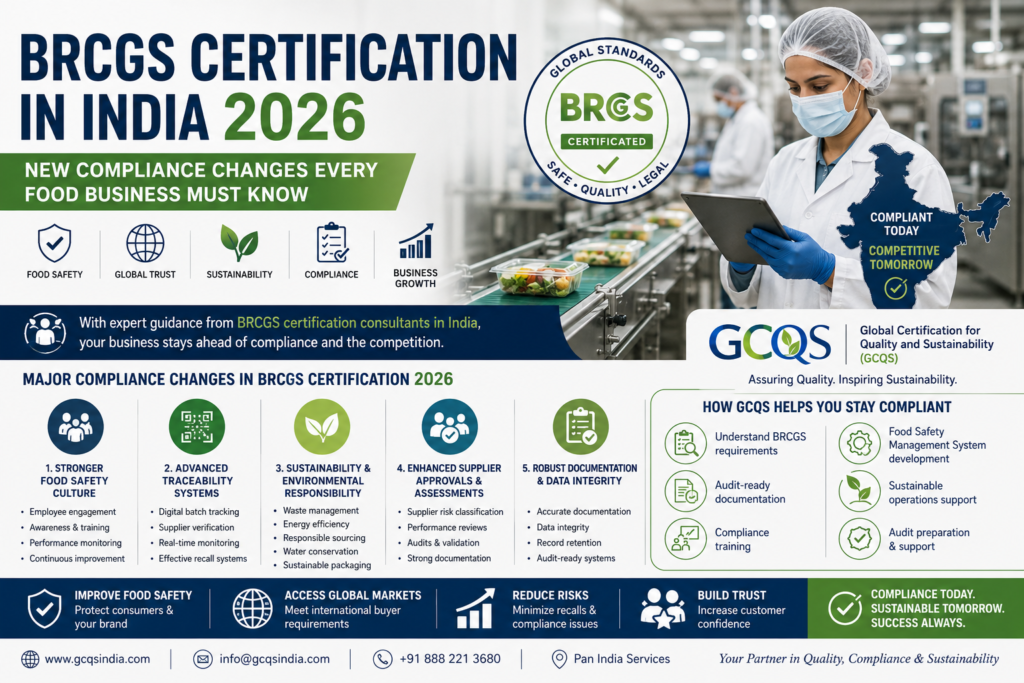
Major Compliance Changes in BRCGS Certification 2026
1. Stronger Food Safety Culture Requirements
One of the important changes relates to fostering a measurable food safety culture among companies. The companies should have evidence of employee involvement, management engagement, and food safety awareness programs at all times.
Food companies need to do the following:
- Train employees on food safety procedures
- Develop employee reporting mechanisms
- Monitor food safety performance
- Develop food safety improvement plans
This ensures that food safety is integrated into the company’s operational processes.
Traceability Systems Becoming More Advanced
Companies have been advised to foster more traceability among their operations using more advanced monitoring technology. This means that BRCGS will promote the adoption of modern technologies to foster traceability in 2026.
Food companies should keep the following information up to date:
- Information about digital tracking of batches
- Information about supplier verification
- Information about monitoring
- Information about product recalls
These activities can be conducted effectively with guidance from professional BRCGS certification consultants in India.
Sustainability and Environmental Responsibility
Sustainability has now become a key concern for the world’s food industries. The newly revised BRCGS system motivates businesses to lower their environmental impacts while keeping their products of high quality.
Areas where sustainability plays an important role include:
- Waste management strategies
- Efficient use of energy
- Source responsibly
- Water preservation
- Packages made sustainably
Organisations like Global Certification for Quality and Sustainability (GCQS) support businesses in aligning themselves with sustainability objectives as well as the criteria for food safety.
Supplier Approvals and Assessments Enhancements
Managing the suppliers has become more rigorous in light of the new BRCGS revisions. Businesses are now asked to carry out thorough analyses of their suppliers’ risks.
These include:
- Supplier performance reviews
- Classification of suppliers based on risk
- Audits and validation procedures
- Effective document management
This helps reduce contamination risks and strengthens supply chain reliability.
Importance of Professional BRCGS Consultants in India
Compliance with new standards may not be an easy feat, especially if you are not well-versed in international audit procedures. This is one reason many firms prefer to seek out expert help from their BRCGS consultants in India.
Services provided by professional consultants include:
- Gap identification and documentation
- Internal audits
- Training employees
- Standard operating procedure (SOP)
- Food safety management system
- Audits preparation
Engaging the services of BRCGS certification consultants in India minimises certification challenges and improves chances of passing an audit.
How GCQS Help in Complying with International Food Safety Standards
Global Certification for Quality and Sustainability (GCQS) offers professional services of certification and compliance to food business owners in India. They can provide expert services which will ensure that your organisation complies with the new standards set by BRCGS and operates efficiently and safely.
- GCQS services include:
- Understanding BRCGS requirements
- Documentations in audit-ready format
- Creating a food safety management system
- Compliance training
- Developing sustainable operations
Their industry-focused approach helps companies achieve international compliance standards with confidence.
Conclusion
The food sector of 2026 has become increasingly dependent on complying with regulatory frameworks. Organisations that are unable to adapt their food safety policies according to the requirements of the future risk will be unsuccessful at the export and retail levels and attract customers. The need to be certified under BRCGS guidelines in India is thus critical in order to achieve long-term success.
With the right BRCGS experts in India, along with organisations such as Global Certification for Quality and Sustainability (GCQS), organisations in the food sector can comply with evolving regulations, enhance food safety compliance and create a world-class brand.
Certification is thus an integral investment towards the future success of an organisation.